






The Future Uncoiled: Key Trends Shaping the Titanium Coil Industry in 2026
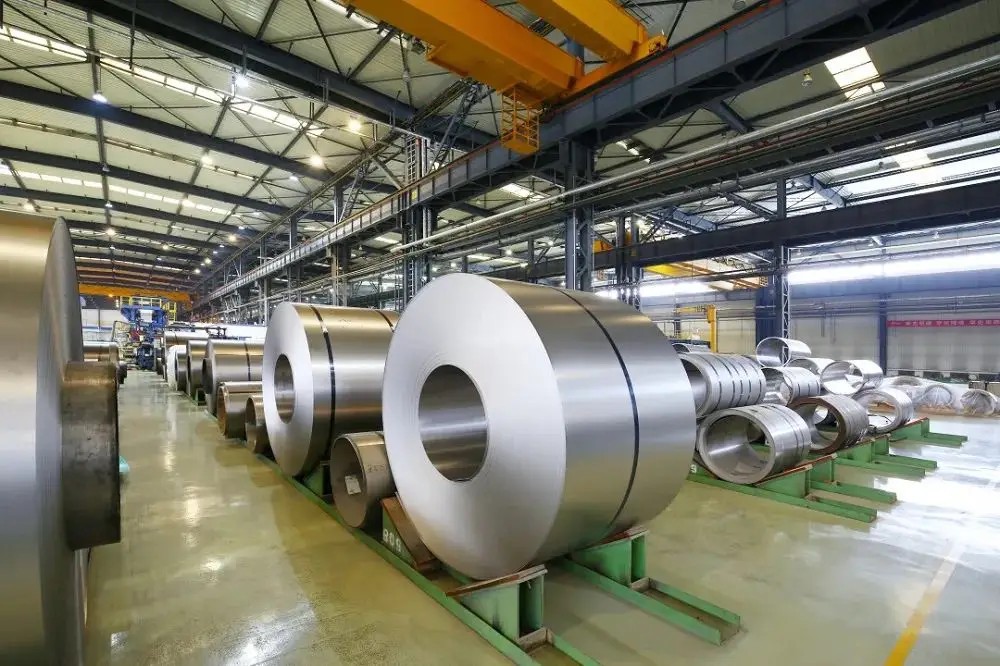
1. Diversification into High-Growth Emerging Markets
While traditional markets like power generation and chemical processing remain strong, 2026 is characterized by the rapid penetration of titanium coils into new, high-tech sectors.
Renewable Energy Acceleration: The energy transition is a major demand driver. In Concentrated Solar Power (CSP) plants, Titanium Coil Tubing is becoming the standard for heat transfer systems due to its unparalleled ability to withstand the corrosive nature of high-temperature fluids, ensuring long-term reliability and reduced maintenance . Similarly, the hydraulic and pitch-control systems of modern wind turbines increasingly rely on the high strength-to-weight ratio of titanium coils to optimize efficiency and withstand constant mechanical stress .
Medical and Biotech Advancements: The biocompatibility of titanium is opening doors in medical devices. Titanium Coil Tubing is now a key component in minimally invasive surgical catheters, valued for its flexibility and non-reactivity within the human body . Furthermore, ongoing research is exploring its use in advanced implants and temperature-control systems within bioreactors, where purity and corrosion resistance are paramount to avoid contamination .
Metallurgical Industry Evolution: In hydrometallurgy and electrolytic refining, titanium coils are proving indispensable. They are used in core devices like reactors and heat exchangers, where their resistance to strong acids and alkalis boosts efficiency and supports greener production methods . For instance, Titanium cathode rolls are eliminating pitting corrosion issues in electrolytic copper production, enhancing both product purity and operational continuity .
2. The Shift Toward Vertical Integration and Supply Chain Sovereignty
A dominant trend in 2026, particularly among Chinese manufacturers, is the move toward fully integrated supply chains. Industry leaders are no longer just fabricators; they are controlling the process from raw earth to finished product.
Companies like Xiangrun (Xrun) have pioneered a model covering the entire spectrum from "Coal – Electricity – Titanium Ore – Titanium Sponge – Titanium Processed Materials – Finished Products" . This vertical integration is a strategic response to global supply chain volatility. By controlling the production of Titanium Sponge—the foundational raw material—manufacturers gain a decisive edge in quality consistency, cost management, and delivery reliability . This sovereignty over quality is particularly vital for aerospace and medical clients, where material integrity is non-negotiable and certifications like EN9100 and Nadcap are mandatory .
3. Technological Advancements in Processing and Performance
Research and development in 2026 are heavily focused on pushing the performance boundaries of titanium coils.
Enhanced Heat Transfer: Significant research is being dedicated to optimizing coil geometry. By using advanced simulations to refine the shape, size, and spacing of coils, manufacturers are maximizing surface area to improve heat transfer efficiency in HVAC and chemical processing applications .
Surface Engineering: To meet the demands of the harsh marine and deep-sea environments, new coating and treatment processes are being developed. These advancements enhance the natural corrosion resistance of titanium, ensuring longer-lasting and more reliable performance for offshore platforms and underwater exploration vehicles .
High-Purity Applications: The semiconductor industry's need for ultra-clean materials is driving demand for high-purity titanium coils. Suppliers now offer products with purity levels up to 99.999% (5N) for use in critical Chemical Vapor Deposition (CVD) and Physical Vapor Deposition (PVD) processes .
4. Regional Market Dynamics: The Rise of Chinese Titans
The competitive landscape in 2026 is distinctly multi-polar, with Chinese firms challenging established global players.
The Vertically Integrated Pioneer: As mentioned, Xrun is leveraging its integrated model to offer a comprehensive range, from Cold-rolled Titanium Strip and Hot-rolled Titanium Strip to Titanium Foil, Titanium Bar, and Titanium Pipe. Their massive scale—with an annual output exceeding 30,000 tons of titanium rolling coils and strips—positions them as a volume leader capable of serving diverse industries from petroleum to medical equipment .
The Established Giant: Companies like Shaanxi Taichen Titanium Industry Co., Ltd remain state-owned behemoths with extensive R&D resources, dominating large-scale, standardized production .
The High-End Specialist: Firms like Western Superconducting Technologies Co., Ltd. (WST) continue to excel in ultra-high-end, specialized titanium alloys for aerospace and high-tech applications, pushing the metallurgical envelope .
Conclusion
The titanium coil industry in 2026 is defined by diversification, integration, and innovation. As applications expand from the ocean floor to outer space, and from the human body to utility-scale solar farms, the material"s unique properties are more valuable than ever. The trend toward vertical integration ensures that the quality of the Titanium Ingot and Titanium Slab translates directly into the performance of the final ASTM B265 Titanium Coil. While challenges related to the high cost of titanium materials persist, ongoing research into processing and alloy development promises to further solidify the titanium coil"s role as a foundational material for the technologies of the future.
Navigation
 How can the service life of titanium plates be extended under harsh working conditions17/04/2026
 Chaoyang accelerates its ¥1.2B small-particle sponge titanium investment, with 50kt capacity boosting aerospace.16/04/2026
 Deeply engaged in the manufacturing of titanium equipment, we safeguard the development of the industry with advanced equipment and practical cooperation15/04/2026
 A New Chapter in Titanium Alloy Applications: Titanium Combs from Aerospace to Hair Care13/04/2026

Send Us A Message