






TC4 Titanium Alloy Forging Process: A Comparative Study of Three Methods
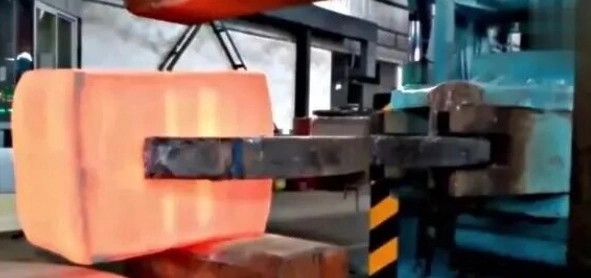
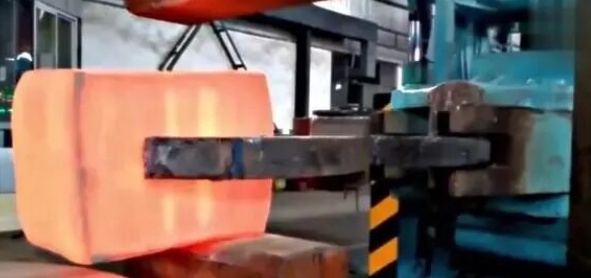
The Challenge of Forging Titanium Alloys
Titanium alloys present unique challenges during forging due to their high deformation resistance and active chemical properties. The microstructure and properties of titanium alloy forgings are highly sensitive to thermomechanical parameters. The forging temperature range is relatively narrow, and deformation resistance increases significantly with strain rate, demonstrating strong strain rate sensitivity. Additionally, titanium alloys have poor thermal conductivity, making them prone to localized overheating during forging. This creates substantial temperature differences between the interior and exterior of the workpiece, leading to uneven deformation distribution and potential cracking or even product failure. Therefore, understanding the effects of different forging processes on the microstructure and mechanical properties of titanium alloys is of great practical significance for production.
Experimental Design Overview
TC4 titanium alloy billets measuring Φ100mm × 450mm were selected for the study, with a measured (α+β)/β transus temperature (Tβ) of 990°C. The billets were divided into three sections and subjected to three different forging processes, all with a deformation amount of 50%, using a 3t free forging hammer:
Conventional (α+β) Forging: Tβ − 60°C
Near-β Forging: Tβ − 20°C
β Forging: Tβ + 40°C
All forgings underwent a dual heat treatment: 900°C × 1h / AC followed by 600°C × 4h / AC. After heat treatment, metallographic, tensile, and impact specimens were prepared. Microstructures were observed under a metallographic microscope, and quantitative statistical analysis was performed using image analysis software to measure parameters such as equiaxed α phase content and secondary lamellar α phase thickness.
Key Findings: Microstructure and Mechanical Properties
Microstructural Characteristics
The three forging processes produce significantly different microstructures:
α+β Forging: Equiaxed structure
Near-β Forging: Mixed structure (equiaxed α + lamellar β)
β Forging: Lamellar structure
Mechanical Properties Comparison
Strength: All three processes yield comparable strength levels, with no significant differences.
Plasticity: α+β forging and near-β forging exhibit significantly higher plasticity than β forging.
Impact Toughness: β forging demonstrates the best impact toughness among the three processes.
Overall, the TC4 titanium alloy microstructure and mechanical properties comparison reveals that near-β forging delivers the best combination of strength, plasticity, and impact toughness.
Fracture Morphology
Tensile specimens from all three forging processes exhibit ductile fracture mechanisms:
α+β Forging and Near-β Forging: Deeper, uniformly distributed equiaxed dimples
β Forging: Relatively flat and elongated dimples
Conclusions and Practical Implications
TC4 titanium alloy processed by α+β forging, near-β forging, and β forging yields equiaxed, mixed, and lamellar microstructures, respectively.
Strength is comparable across all three processes; α+β forging and near-β forging offer higher plasticity than β forging, while β forging provides the best impact toughness.
Near-β forging delivers the optimal combination of mechanical properties, making it the recommended forging process for TC4 titanium alloy bars.
All three processes exhibit ductile fracture, but dimple morphology differs significantly.
These findings provide a clear reference for selecting forging processes in practical production of TC4 titanium alloy forgings. When strength, plasticity, and impact toughness need to be balanced, near-β forging is the preferred approach. These insights are particularly valuable for titanium alloy forgingprocess optimization in aerospace, automotive, and medical applications where TC4 titanium alloy is widely used.
Navigation
 Core Mechanical Properties of Titanium Plates & Their Cross-Industry Application ValueJul 08, 2026
- Titanium Pipe Comprehensive IntroductionJul 07, 2026
 TC4 Titanium Alloy Forging Process: A Comparative Study of Three MethodsJun 25, 2026
 The main advantages of titanium welded pipes over other metal pipesApr 22, 2026
Send Us A Message