






Analysis of the Current Status and Future Trends of the Titanium Wire Market
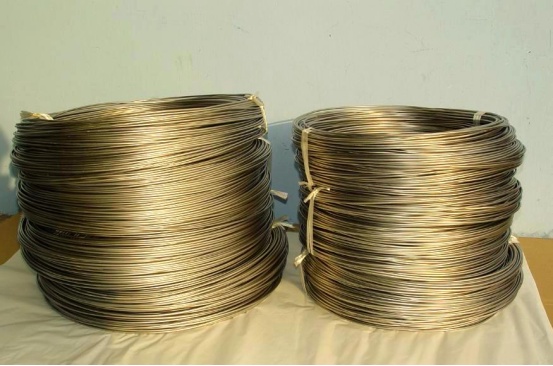
Current Situation and Prospects of the Titanium Wire market
Titanium wire is a metallic material that plays a crucial role in multiple fields such as aerospace, medical devices, and chemical equipment. It has attracted much attention for its excellent corrosion resistance, high strength and light weight. In recent years, the global titanium wire market has continued to show a growth momentum.
1.1 ▲ Global Market Growth trends
According to multiple market reports, the global titanium wire market size reached approximately 1.003 billion yuan in 2023, with the Chinese market contributing a share of 129 million yuan. Looking ahead, the global titanium wire market is expected to reach 1.89 billion yuan in 2029, with a compound annual growth rate as high as 9%. The Chinese market will continue to drive global market growth.
1.2 ▲ Price Fluctuations and Supply and Demand Relationship
The price of titanium wire is influenced by a variety of factors, including raw material costs, market demand, and international trade policies, etc. From January to November 2024, the price of titanium wire will show a certain degree of volatility. Specifically, the price of pure titanium wire (with a diameter of 1-2 millimeters) ranges from 180,000 to 190,000 yuan per kilogram, while the price of titanium wire with a diameter over 2 millimeters is between 160,000 and 190,000 yuan per kilogram. Meanwhile, there have also been some changes in the import and export volume of titanium wire. For instance, in November 2024, China's imports of titanium wire were 7.472 tons, a significant year-on-year decrease of 60.53%, while the exports were 102,609 tons, a slight year-on-year increase of 17.84%.
1.3 ▲ Application Fields and Technological Innovation
Titanium wire plays a crucial role in multiple fields such as aerospace, medical devices, and chemical equipment. Especially in the aerospace field, with the continuous advancement of technology, the demand for titanium wire keeps rising. Meanwhile, the application of titanium wire in the 3C field (including computers, communications and consumer electronics) is also growing rapidly, and it is expected that the market space will be further expanded in the coming years.
It is worth noting that the oxygen, nitrogen and hydrogen elements in titanium wire materials have a significant impact on their application performance. Although oxygen and nitrogen can strengthen titanium alloys, they can also reduce their plasticity. However, if the hydrogen content is too high, it may lead to the precipitation of hydrides, forming a brittle layer and making the material brittle. Therefore, accurately determining the content of these elements in titanium wire materials is of vital importance. At present, the mainstream method in the industry is to use an oxygen-nitrogen-hydrogen analyzer for testing. This instrument adopts the pulse inert gas fusion method and features high data stability, good experimental result accuracy, and convenient and rapid operation. It can meet the daily detection and analysis needs of oxygen, nitrogen and hydrogen element contents of customers.
1.4 ▲ Industry Challenges and Future Opportunities
Although the titanium wire industry has a broad market prospect, it is confronted with challenges such as an imbalance between supply and demand of high-end products and the improvement of environmental protection standards. However, with the advancement of technological innovation and industrial upgrading, this industry is expected to achieve more sustainable development in the future and continue to expand its application fields.
Market Influencing Factors and Forecasts
2.1 ▲ Factors Influencing the Price of Titanium Wire
The fluctuation of titanium wire prices is influenced by multiple factors, including raw material costs, market demand, and international trade policies. The cost of raw materials is the primary factor influencing the price of titanium wire. As the main raw material for titanium wire, the price fluctuation of titanium ore is directly reflected in the production cost. The supply and demand changes in the global market are the key factors causing fluctuations in the price of titanium ore, which in turn have a direct impact on the price of titanium wire.
Changes in market demand will also have an impact on the price of titanium wire. With the continuous development of the titanium alloy industry, the demand for titanium wire has gradually increased, which has changed the original balance of supply and demand in the market. During periods of strong demand, the price of titanium wire may rise accordingly. When demand is insufficient, prices may drop.
The price trend in the international market should not be ignored either. As China has a certain degree of import dependence on titanium products, price fluctuations in the international market will directly be reflected in the domestic market price of titanium wire. Changes in demand and policy adjustments in the international market will have a significant impact on the domestic market.
In addition, seasonal factors, changes in the global economic environment, and the volatility of the market itself will all have an impact on the price of titanium wire. For instance, the peak season demand in certain downstream industries might push up the price of titanium wire. During the off-season, weakened demand may lead to a decline in prices. Meanwhile, uncertainties in the global economic environment such as geopolitical situations may also have an impact on the price trend of titanium wire.
2.2 ▲ Application Development in the 3C field
There are various types of titanium wires. According to their different uses and properties, they can be classified into pure titanium wires, titanium alloy wires, titanium eyeglass wires, etc. These titanium wires have extensive applications in multiple fields, especially in the 3C sector, such as lightweight design for consumer electronics and 3D printing materials. Titanium and titanium alloy materials are widely used in high-end consumer electronic products such as Apple's iPhone and Apple Watch. By taking advantage of their high strength, low density and excellent mechanical properties, they bring more outstanding performance and design aesthetics to the products.
The demand for titanium wire in the 3C field has seen explosive growth, with the total usage increasing by nearly 10,000 tons throughout 2023. Looking ahead, by 2028, the usage of 3C titanium frames is expected to reach 15,700 tons, with a market value as high as 90 billion yuan. This indicates that the demand for titanium wire in the 3C field will remain strong in the coming years.
With the continuous advancement of technology and the constant development of industry, the demand for titanium wire will further increase. For instance, Jiangsu Tiangong Co., Ltd. has successfully solved the problem of microstructure control in titanium alloy discs through scientific research investment, thereby promoting the continuous in-depth application of titanium wires in the 3C field.
However, although the application popularity of titanium and titanium alloy materials in the 3C field continues to rise, their comprehensive market application still faces many challenges. At present, most of the added value and profits are mainly concentrated in the hands of downstream manufacturers or designated suppliers. Therefore, the improvement of the upstream and downstream industrial chains or becoming a designated supplier will be the key to obtaining a larger profit margin.
2.3 Major producing and consuming countries
China is the world's largest producer and consumer of titanium microfilament, holding a significant share of global production capacity and output. In addition, the United States, Germany, Japan and Canada are also among the world's major producers and consumers of titanium wire. These countries play a crucial role in the global titanium wire market.
Navigation
 How can the service life of titanium plates be extended under harsh working conditions17/04/2026
 Chaoyang accelerates its ¥1.2B small-particle sponge titanium investment, with 50kt capacity boosting aerospace.16/04/2026
 Deeply engaged in the manufacturing of titanium equipment, we safeguard the development of the industry with advanced equipment and practical cooperation15/04/2026
 A New Chapter in Titanium Alloy Applications: Titanium Combs from Aerospace to Hair Care13/04/2026


Send Us A Message