






Common Problems in the Production of Titanium Tubes
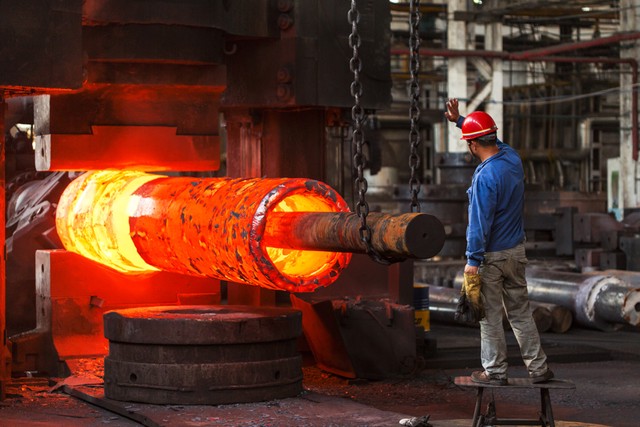
1. Raw Material and Billet Preparation Challenges
The production of high-quality titanium tubes begins with the integrity of the raw material and the preparation of tube billets.
Alloy Homogeneity and Inclusion Control
During the melting phase, titanium alloys are prone to forming high-density inclusions, elemental segregation, or brittle intermetallic phases. These metallurgical irregularities result in uneven deformation during subsequent forming operations and can lead to cracking. To minimize these issues, manufacturers employ advanced melting techniques such as multiple vacuum arc remelting or electron beam cold hearth melting to ensure chemical uniformity throughout the material.
Extrusion-Related Defects
When producing tube billets through extrusion, process parameters significantly influence surface quality. Research on Gr.12 titanium tubes has demonstrated that improper extrusion conditions can generate inner wall defects. Specifically, when mold hardness falls below HRC 35 or surface roughness exceeds Ra 1.6 μm, the surface quality of the extruded billet becomes inconsistent. Additionally, inappropriate sheathing materials can create problems. A single copper sheath has been observed to cause rapid hardness degradation in the extrusion needle and poor inner surface finish, whereas steel/copper composite sheathing delivers superior results. In defective regions, metallurgical examination has revealed the formation of titanium-copper eutectic structures, indicating undesirable reactions between the billet and sheath material.
2. Hot and Cold Working Difficulties
The mechanical processing of titanium tubes, whether through hot rolling or cold rolling operations, presents specific challenges related to temperature management and material deformation behavior.
Hot Rolling and Thermal Management
Titanium alloys possess low specific heat capacity, causing rapid surface temperature loss during hot rolling and complicating thermal control. Finite element analysis of continuous hot rolling processes indicates that temperature differentials between the inner and outer tube surfaces can reach 250°C. Such thermal gradients, combined with elevated tensile stresses on the outer surface during certain rolling passes, substantially increase the likelihood of surface defects forming.
Cold Rolling Deformation and Surface Cracking
In cold rolling applications, deformation control is critical. Excessive deformation per pass results in poor surface quality, crack formation, and potential rupture, while insufficient deformation fails to adequately refine the coarse cast structure, yielding inferior mechanical properties. For thick-walled tubes with diameter-to-thickness ratios below 10, multi-roll mills typically require numerous passes and remain susceptible to cracking and inner surface adhesion problems.
Research on Gr.3 thick-walled titanium tubing has identified micro-crack formation on inner surfaces as particularly difficult to control during cold working, which subsequently reduces ultrasonic inspection acceptance rates. Studies demonstrate that boring operations removing 0.30 mm from the inner wall after the initial rolling pass effectively eliminate these micro-cracks and markedly enhance final product quality.
3. Common Welding Defects in Titanium Tubes
For welded titanium tubes, the joining process represents a primary source of defects. Titanium's high chemical reactivity at elevated temperatures demands meticulous care during welding operations.
Porosity Formation
Porosity ranks among the most frequently encountered welding defects in titanium welded pipe production. This condition primarily results from hydrogen contamination, with sources including residual moisture or oils on base materials or filler wires, as well as impure shielding gas. Hydrogen exhibits high solubility in the elevated-temperature weld pool but becomes trapped as it precipitates during rapid cooling, forming pores that diminish the fatigue strength of the welded joint.
High-Temperature Oxidation and Discoloration
At temperatures exceeding 500-700°C, titanium readily absorbs oxygen and nitrogen from the surrounding atmosphere. This absorption promotes formation of a brittle oxide layer, indicated by weld discoloration ranging from straw through blue, purple, or grey hues. Such contamination severely compromises ductility and toughness. The weld color serves as a direct indicator of shielding effectiveness—while silver and light straw appearances are acceptable, purple, blue, or grey colors signify severe oxidation requiring weld rejection.
Delayed Cracking Phenomena
A particularly problematic issue in titanium tube welding is delayed cold cracking, where cracks may appear hours or even days after welding completion in the heat-affected zone. This mechanism is driven by hydrogen diffusion, precipitation of titanium hydrides, and the presence of residual stresses, leading to spontaneous fracture.
Inadequate Shielding Gas Protection
Given titanium's chemical reactivity, providing comprehensive gas protection presents considerable difficulty yet remains essential. The weld pool, heat-affected zone, and weld root must all receive high-purity argon shielding until temperatures drop below 400°C. Any shielding interruption, such as insufficient argon purging inside the tube interior, leads to root oxidation and embrittlement.
4. Post-Processing and Dimensional Control Issues
Following primary forming operations, finishing processes including heat treatment, straightening, and cutting introduce additional challenges.
Heat Treatment Parameter Control
Heat treatment parameters demand precise regulation. Excessive temperatures cause grain coarsening, weakening the material, while insufficient temperatures result in under-annealing, failing to eliminate residual stress and work hardening. For TA18 alloy tubes, research has established that vacuum annealing at 700°C for one hour provides optimal mechanical properties combined with fine, uniform grain structure.
Straightening and Dimensional Stability
Titanium's high yield ratio produces significant spring-back during bending and straightening operations, complicating geometric precision control. For thick-walled tubes, cold straightening alone frequently cannot achieve required flatness specifications, sometimes necessitating heat straightening at 500-600°C. Furthermore, during production of large-diameter, ultra-thin-walled titanium tubes, forming and outer diameter control become particularly difficult, and the finished tubes remain susceptible to deformation during cutting operations.
5. Quality Control and Inspection Challenges
Ensuring final product quality requires rigorous inspection procedures, though titanium's material properties can complicate these processes.
Ultrasonic Testing Difficulties
Surface roughness and material texture can affect ultrasonic inspection accuracy. Inner surface micro-cracks, particularly those oriented unfavorably relative to the inspection direction, may escape detection until later processing stages. This limitation necessitates multiple inspection points throughout the production sequence.
Surface Condition Requirements
Final surface condition requirements for titanium tubes often demand additional processing steps. Pickling operations must remove oxide layers without introducing hydrogen pickup, while mechanical polishing must achieve specified finishes without work hardening the surface excessively.
Summary
The production of high-quality titanium tubes demands meticulous control throughout every manufacturing stage. Principal challenges include maintaining chemical homogeneity during melting, preventing contamination during all thermal operations, precisely controlling temperature and deformation during rolling, ensuring complete inert gas shielding during welding, and carefully managing heat treatment and straightening processes to achieve final dimensional accuracy and material properties. Successfully addressing these issues requires thorough understanding of titanium metallurgy and unwavering commitment to rigorous process control throughout the manufacturing sequence.
Navigation
 How can the service life of titanium plates be extended under harsh working conditions17/04/2026
 Chaoyang accelerates its ¥1.2B small-particle sponge titanium investment, with 50kt capacity boosting aerospace.16/04/2026
 Deeply engaged in the manufacturing of titanium equipment, we safeguard the development of the industry with advanced equipment and practical cooperation15/04/2026
 A New Chapter in Titanium Alloy Applications: Titanium Combs from Aerospace to Hair Care13/04/2026
Send Us A Message