






Recent Development Trends of Titanium Mesh: Technological Innovation Drives Industry Upgrade in 2026
Time:Mar 03, 2026
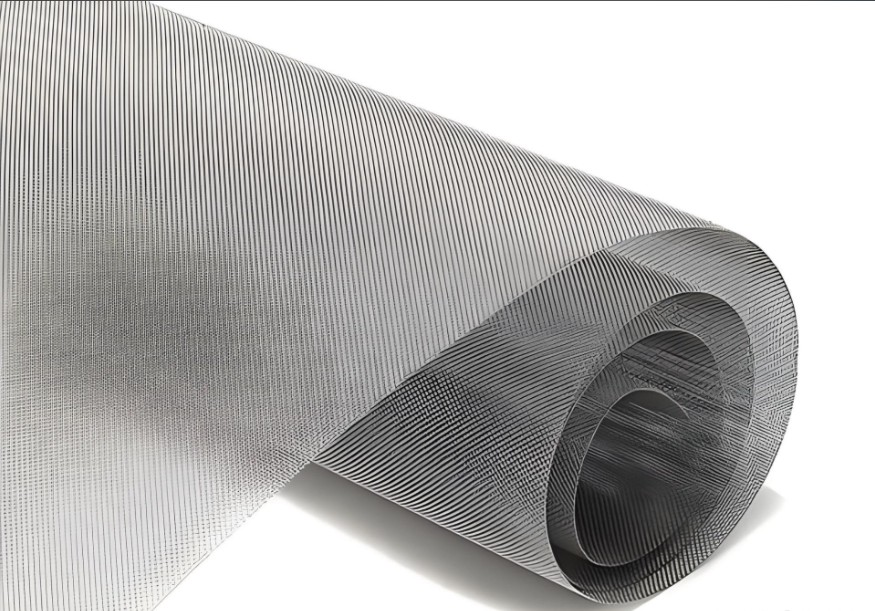
As a key high-end special metal material, titanium mesh has shown robust growth momentum in recent years, driven by technological breakthroughs, policy support and expanding downstream applications. In 2026, the global titanium mesh industry enters a new development cycle characterized by structural optimization, technological upgrading and scenario expansion, with China emerging as a core growth engine for high-quality titanium mesh, according to industry research reports. The rising demand for high-precision titanium mesh and medical titanium mesh has become a key driver of industry growth.
Technological innovation is the core driving force behind the upgrading of the titanium mesh industry. Advanced manufacturing technologies such as laser-assisted weaving, 3D printed titanium mesh and intelligent heat treatment have been widely applied, significantly improving product precision and production efficiency. Western Superconducting, a leading enterprise, has achieved breakthroughs in the uniformity control of ultra-fine titanium mesh heat treatment, with the batch qualification rate of φ38μm medical titanium mesh delivered to orthopedic enterprises reaching 99.2%, much higher than the industry average of 87.5%. Meanwhile, Hunan Xiangtou Jintian has increased the forming efficiency of complex curved titanium mesh by 2.3 times through laser-assisted weaving technology, successfully entering large-scale chemical engineering projects. The popularization of intelligent production lines has also promoted the industrial upgrading, with Baoji Lixing Titanium’s independently developed 12-axis precision weaving machine increasing the yield rate of 0.01mm-grade wire diameter titanium mesh to 89.3%, boosting the supply capacity of high-precision titanium mesh.
The market scale of titanium mesh maintains steady growth, with obvious optimization of product structure. It is predicted that the market scale of China’s titanium mesh industry will reach 1.379 billion yuan in 2026, a year-on-year increase of 7.2%. Globally, the medical repair titanium mesh market is expected to grow at a CAGR of 8.5% from 2026 to 2033, reaching 300 million US dollars by 2033. In terms of product categories, ultra-fine titanium mesh for medical orthopedic implants and high-precision titanium mesh for nuclear power have become the main growth points. In 2025, the shipment volume of ultra-fine titanium mesh with aperture ≤0.02mm and wire diameter ≤0.015mm increased by 32.7% year-on-year, while the average price of titanium mesh components for nuclear power evaporators rose by 9.2%. The export market also shows a positive trend, with the export average price of China’s high-quality titanium mesh reaching 89.6 US dollars per kilogram in 2025, a year-on-year increase of 5.1%.
Downstream application scenarios are constantly expanding, driving the diversified development of titanium mesh. Relying on its excellent corrosion resistance, light weight and biocompatibility, titanium mesh—including 3D printed titanium mesh and ultra-fine titanium mesh—has been widely used in chemical industry, medical treatment, aerospace, nuclear power and other fields. In the chemical industry, it is used in corrosion-resistant filtration systems for coal chemical and petrochemical projects, accounting for 41.3% of the total shipment area of titanium mesh in 2025. In the medical field, medical titanium mesh is widely used in orthopedic implants, dental implants and tissue regeneration scaffolds, with the demand growing at an annual rate of 12.4%. In the aerospace field, high-precision titanium mesh is applied in aircraft fuel filtration and spacecraft ventilation systems, giving full play to its advantages of high strength and light weight. In addition, the emerging new energy field has become a new growth point, with titanium mesh used in fuel cell gas diffusion layers, growing at an annual rate of 18.9%.
Policy support provides a strong guarantee for the development of the titanium mesh industry. China’s Ministry of Industry and Information Technology has included high-precision welded titanium mesh for nuclear power and implant-grade woven titanium mesh for medical use in the priority support sequence, and the central financial fund has allocated 117 million yuan in subsidies for titanium mesh projects in 2025. The introduction of mandatory national standards such as "Energy Consumption Quota for Titanium Mesh Weaving Process" has promoted the green and low-carbon development of the titanium mesh industry, requiring the comprehensive energy consumption per unit output value of new production lines to be reduced by 31.9%.
Industry insiders pointed out that the titanium mesh industry has moved beyond the stage of simple scale expansion and entered a new period of high-quality development. In the future, with the deep integration of digital and intelligent technologies, the continuous breakthrough of key technologies for high-precision titanium mesh and medical titanium mesh, and the continuous expansion of emerging application scenarios, the titanium mesh industry will usher in broader development space, and high-end, customized and green titanium mesh products will become the core competition focus.
Navigation
 How can the service life of titanium plates be extended under harsh working conditions17/04/2026
 Chaoyang accelerates its ¥1.2B small-particle sponge titanium investment, with 50kt capacity boosting aerospace.16/04/2026
 Deeply engaged in the manufacturing of titanium equipment, we safeguard the development of the industry with advanced equipment and practical cooperation15/04/2026
 A New Chapter in Titanium Alloy Applications: Titanium Combs from Aerospace to Hair Care13/04/2026


Send Us A Message