






Titanium: The Metal That Refuses to Play by the Rules
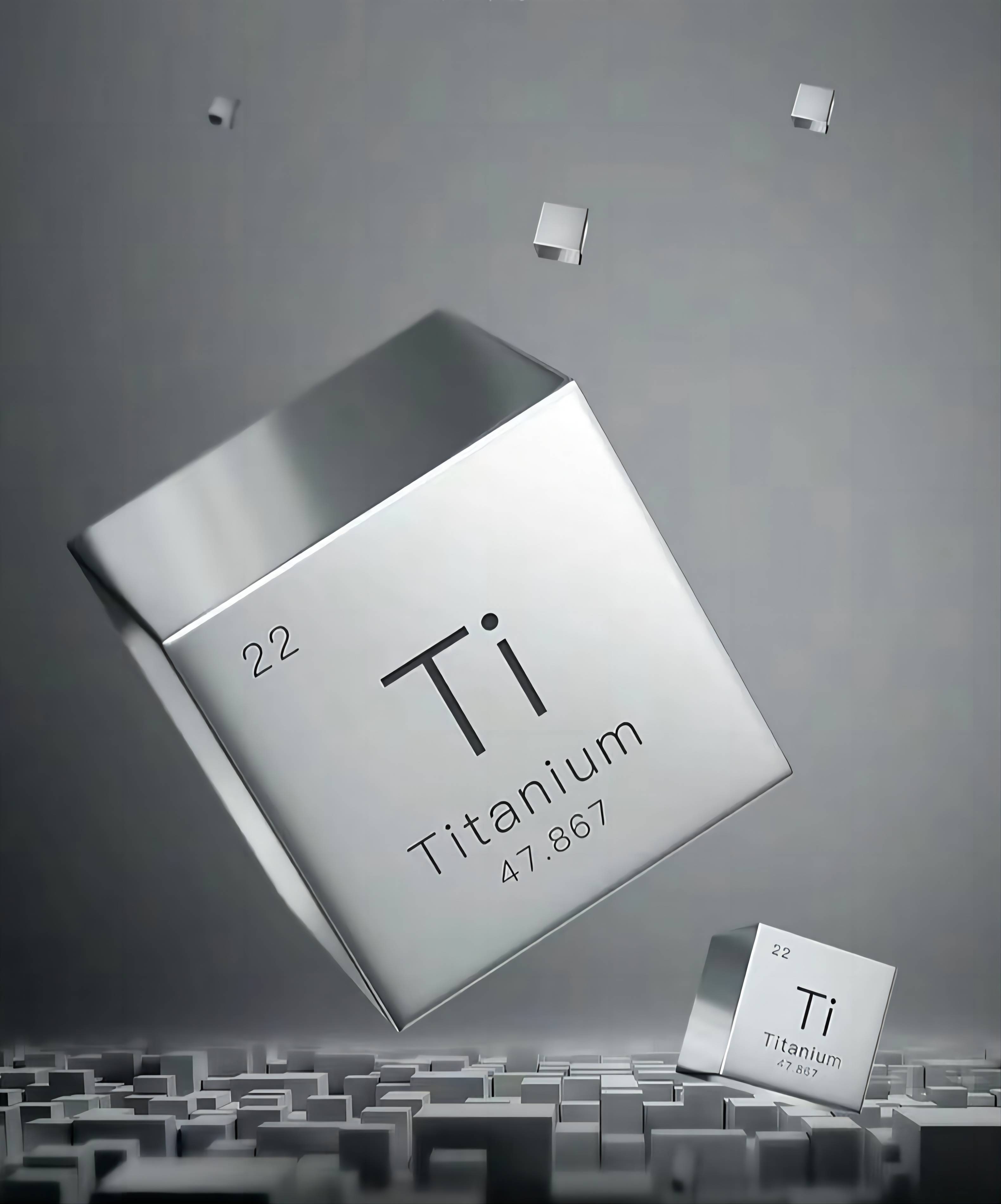
Every metal has a personality. Steel is dependable. Aluminum is light but soft. Copper conducts like a dream but bends like butter. And then there's titanium—the material that seems to exist just to frustrate engineers who want things to be simple.
Because titanium breaks rules. It's strong but not heavy. It resists corrosion without needing paint. It gets along with the human body better than almost any other metal. But try to machine it, and it'll eat your cutting tools for breakfast. Try to weld it, and it demands the kind of clean-room conditions most shops don't have.
So what makes titanium this complicated, contradictory, utterly indispensable material? Let's walk through the properties that make it both infuriating and invaluable.
The First Rule It Breaks: Heavy Isn't Strong
Most people grow up with an intuitive sense about metal: heavy stuff is strong stuff. A steel I-beam feels solid because it is solid. Pick up a chunk of lead, and your arm tells you this thing is no joke.
Titanium ruins that intuition the first time you hold it.
A block of titanium weighs about half what you'd expect. At 4.5 grams per cubic centimeter, it sits right between aluminum (2.7) and steel (7.8). But here's the part that messes with people: despite being light, titanium hangs with steel in the strength department.
Common titanium alloys like Ti-6Al-4V push tensile strength past 1,000 MPa—numbers that would make most structural steels blush. So you end up with a metal that's light like aluminum but strong like steel. That combination doesn't exist anywhere else in the periodic table at this scale.
This is why aerospace engineers treat titanium like gold. Every pound saved on a jet is fuel saved for years. A titanium landing gear component can do the same job as a steel one at nearly half the weight. Multiply that across an entire aircraft, and you're talking about millions in operational savings.
The Self-Healing Lie
Ask a materials scientist about corrosion resistance, and they'll talk about coatings, platings, anodizing—all the things we do to keep metal from turning back into ore.
Titanium doesn't need any of that.
The moment you expose titanium to air, it grows a oxide layer—a film so thin it's measured in nanometers, but so tough it might as well be armor. Scratch it, and the layer reforms. Dunk it in seawater for a decade, and that protective film just keeps doing its job.
Here's what that means in practice: a titanium pipe carrying seawater on an offshore platform can outlast the platform itself. A titanium heat exchanger in a chemical plant can run for thirty years without a single shutdown for corrosion-related maintenance.
Compare that to carbon steel, which needs coatings, cathodic protection, and constant inspection. Compare it to stainless steel, which can still pit and crack in chlorides. Titanium doesn't play that game. It just… sits there, ignoring the environment.
The Temperature Contradiction
Titanium melts at about 1,668°C. That's higher than steel. So you'd think it handles heat like a champ across the board. And in some ways, it does.
Jet engines use titanium in compressor blades and casings because it holds strength at temperatures where aluminum would turn to mush. Rocket components rely on titanium for the same reason.
But here's the weird part: titanium is terrible at moving heat.
Thermal conductivity for titanium sits around 17–22 W/mK. For context, copper runs at about 400. Steel is around 45–60. So when you heat titanium—say, with a welding torch—that heat doesn't spread out. It stays where you put it.
That's great if you're building a heat shield. It's miserable if you're trying to weld. The weld zone gets screaming hot, the surrounding metal stays relatively cool, and if you don't shield every surface from oxygen, the weld turns brittle and cracks. This is why welding titanium requires argon coverage on both sides of the joint—not just the top.
The Body’s Favorite Metal
Here's a test: implant a steel screw in someone's leg. The body reacts. It forms scar tissue. Sometimes it rejects the metal outright.
Implant titanium, and the body does something remarkable: it grows bone directly onto the metal. Dentists call this osseointegration. Orthopedic surgeons rely on it for hip and knee replacements. It's why titanium has become the standard for medical implants.
The reason goes back to that oxide layer. It's chemically inert. The body doesn't recognize titanium as a foreign invader, so there's no immune response. No corrosion inside the body. No leaching of toxic ions.
A titanium hip implant can last twenty years without failing. A titanium dental implant can fuse with the jawbone so completely that it functions like a natural tooth root. No other metal comes close to this level of biocompatibility.
The Machining Nightmare
If you've ever run a lathe or a milling machine, you know some metals cut like butter and others fight you every step of the way.
Titanium fights.
That low thermal conductivity we talked about? When you're cutting titanium, the heat stays at the cutting edge instead of flowing into the chip. That heat destroys tooling. Carbide inserts that last hours on steel can wear out in minutes on titanium.
Machinists learn to slow way down. Cutting speeds for titanium run about 30% slower than stainless steel, and tool life is roughly half. The chips that come off a titanium cut are stringy and tough—they don't break cleanly like steel chips.
This isn't a design flaw. It's the price of admission. You want a metal with titanium's properties? You pay for it in fabrication time and tooling costs.
The Price Tag Truth
Everyone knows titanium is expensive. But the reasons aren't what most people assume.
It's not because titanium is rare. It's actually the ninth most abundant element in the Earth's crust. The problem is extraction. The Kroll process—which turns titanium ore into usable metal—is energy-intensive, slow, and expensive. It involves reacting titanium tetrachloride with magnesium at high temperatures in a batch process that's hard to scale.
Once you have the raw metal, fabrication adds more cost. Those machining challenges, the welding requirements, the specialized equipment—it all adds up.
So yes, a titanium bar costs 20 to 40 times more than a steel bar of the same size. But that's not the whole story.
The Long Game
When engineers run the numbers on titanium, they rarely look at initial cost alone. They look at lifecycle cost.
A steel component might be cheap to buy, but it needs:
Coatings or plating
Regular inspection
Corrosion allowances (extra material thickness)
Eventual replacement
A titanium component costs more upfront, but it often requires none of that. Install it and walk away. In offshore oil platforms, chemical plants, and desalination facilities, that's worth a premium.
There's a saying in the industry: steel is for projects with a five-year horizon. Titanium is for projects with a fifty-year horizon.
The Other Titanium: The One You Use Every Day
Here’s a fact that surprises most people: you probably use titanium every day, but not the metal form.
About 95% of titanium consumed worldwide is titanium dioxide (TiO₂)—a white pigment that shows up in:
The paint on your walls (that brilliant white coverage)
The sunscreen on your skin (UV protection without absorption)
The toothpaste in your bathroom (whitening)
The candies in your pantry (food coloring E171)
The self-cleaning glass on office buildings (TiO₂ coatings break down dirt in sunlight)
The titanium dioxide market is massive—pushing toward $30 billion globally. So even if you never touch a titanium golf club or bicycle frame, you're still benefiting from the element's unique properties.
Navigation
 How can the service life of titanium plates be extended under harsh working conditions17/04/2026
 Chaoyang accelerates its ¥1.2B small-particle sponge titanium investment, with 50kt capacity boosting aerospace.16/04/2026
 Deeply engaged in the manufacturing of titanium equipment, we safeguard the development of the industry with advanced equipment and practical cooperation15/04/2026
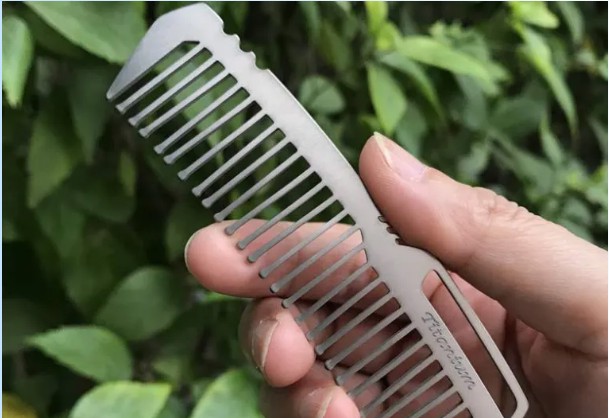
 A New Chapter in Titanium Alloy Applications: Titanium Combs from Aerospace to Hair Care13/04/2026

Send Us A Message