






A New Chapter in Titanium Alloy Applications: Titanium Combs from Aerospace to Hair Care
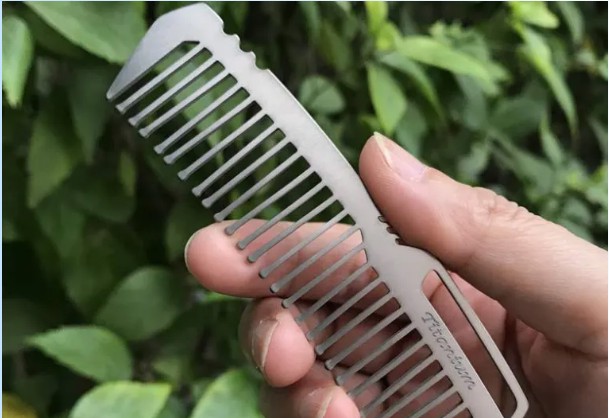
With the upgrading of consumption and the deepening of the concept of healthy living, a small comb is undergoing a material revolution. Behind this revolution lies the "dimensional reduction application" of titanium alloy, a former aerospace material. With features such as anti-static, antibacterial durability and extreme lightness, titanium combs have quickly gained popularity and become a new "Internet celebrity" in the personal care field. From rocket engine components, deep-sea probe casings to a comb in our daily hands, what changes has the cross-border application of titanium alloys brought to traditional tools?
Titanium alloys, with their unique physical and chemical properties, have long been indispensable in fields such as aerospace, medical implants, and Marine engineering. Nowadays, it has entered daily life, interpreting the value of "civilitizing high-end materials" in the form of a comb. Unlike traditional wooden or plastic combs, the birth of a high-quality titanium comb begins with 3D modeling, and the key to its success or failure lies in the manufacturing of the comb needles. Titanium wire needs to go through multiple processes such as forging the blank, rolling, annealing, finishing, pickling and mold forming. The parameters of each step are completely different from those of ordinary metals - this is precisely the manifestation of the high processing difficulty of titanium alloys, which requires repeated testing and long-term optimization.
Precision processes such as stamping, laser cutting, etching and vacuum plating are often adopted in the processing stage. The edges and corners of the comb formed by stamping are sharp and must be precisely polished and ground into a smooth and round surface to ensure that it does not hurt the scalp or hair. Some high-end brands even adopt 17 processes for fine finishing and polishing, from edge grinding to laser welding, without outsourcing the entire process, and the quality reaches military-grade standards. Some products also undergo PVD vacuum plating treatment to form a dense protective layer, enhancing corrosion resistance and aesthetic appeal. These processes, which were originally mostly used in aircraft blades or high-end watch cases, are now being applied in comb manufacturing, which is a microcosm of the maturity of titanium alloy processing technology and the reduction in costs.
The reason why titanium combs stand out lies in the natural properties of titanium alloys. Titanium has antibacterial properties and biological affinity (often referred to as a "biometallic metal"), and its surface is not prone to adsorbing dust and grease, which can reduce bacterial growth. At the same time, it contains no allergens and is extremely friendly to sensitive scalps. It is even used in medical implant devices - from artificial joints, dental implants to pacemaker housings. The "biophile" property of titanium alloy has been medically verified for decades. It is used for combs and can be called "the healthiest metal".
Anti-static is the most favored function. Titanium metal has good electrical conductivity and can quickly release static charges during carding. Experiments show that titanium combs can reduce static electricity by more than 90%. Some users commented in the review that they never experienced static electricity when using a pure titanium comb even once in winter, and their hair remained as smooth as if it had just been treated.
It also excels in lightweighting. Titanium has a low density (about 4.5g/cm³) and high strength (the tensile strength of some titanium alloys is comparable to that of steel). Its density is only about 60% of that of steel, but its specific strength (strength/density) is far superior to that of steel. The common titanium combs on the market weigh about 30 to 60 grams, with the lightest being only 24 grams, which is half the weight of traditional metal combs. Holding them for a long time is less likely to cause wrist pain. In addition, titanium is corrosion-resistant, does not rust and does not oxidize - even when exposed to seawater, sweat and acidic shampoo for a long time, it will not develop rust spots. This characteristic stems from the dense oxide film that forms on the surface of titanium, which is precisely why titanium alloys are used in water-cooled pipes of aircraft carriers and pressure-resistant shells of submarines. When applied to combs, its service life far exceeds that of traditional comb tools.
With its outstanding performance, the application scenarios of titanium combs are constantly expanding. When used at home, the comb teeth are designed with a slightly arc-shaped or round tip, fitting the scalp closely, ensuring smooth hair without getting stuck or pulling on the hair follicles. Many users have reported that the pure titanium massage comb can effectively relax the scalp and relieve stress. When used in combination with a hair dryer to warm the comb needles and comb, the comfort level is even greater.
When traveling outdoors, titanium combs are not afraid of being dropped, pressed or rusting. They can be used immediately after being wiped dry in water, overcoming the shortcomings of wooden combs being prone to mold and plastic combs being brittle. In the professional hairdressing field, pure titanium combs have smooth teeth without burrs, which are less likely to damage hair quality. They are also easy to clean and disinfect, and their hygiene far exceeds that of ordinary combs. In terms of pet care, titanium is much lighter than stainless steel, which can reduce the burden on the arms of beauticians during long periods of grooming, and prevent tendinitis and wrist discomfort. In addition, titanium combs have become a popular choice in the gift market due to their high-end texture and technological attributes.
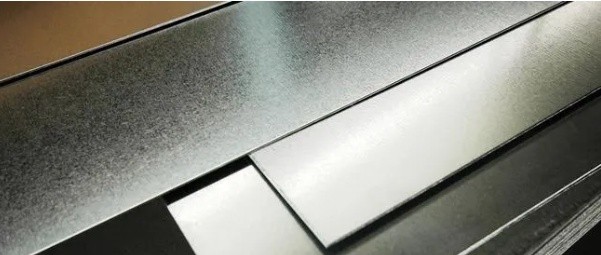
The application of titanium alloys has long transcended the grand narrative of "reaching for the sky and the sea", and is now permeating daily life in a subtle and imperceptible way. From traditional wooden combs and plastic combs to today's high-purity titanium combs, these small combs have witnessed the evolution of material science and technology, and also reflect people's pursuit of a quality life. With the continuous maturation of titanium alloy processing technology and the continuous improvement of consumer awareness, titanium combs are expected to become a daily standard for more families, ushering in the "titanium era" in the field of personal care. This case also reminds us that when cutting-edge materials enter civilian use, every everyday small item may undergo a disruptive upgrade in experience.
Navigation
 How can the service life of titanium plates be extended under harsh working conditions17/04/2026
 Chaoyang accelerates its ¥1.2B small-particle sponge titanium investment, with 50kt capacity boosting aerospace.16/04/2026
 Deeply engaged in the manufacturing of titanium equipment, we safeguard the development of the industry with advanced equipment and practical cooperation15/04/2026
 A New Chapter in Titanium Alloy Applications: Titanium Combs from Aerospace to Hair Care13/04/2026


Send Us A Message