






Titanium Tube vs Steel Tube: What the Spec Sheets Don’t Tell You
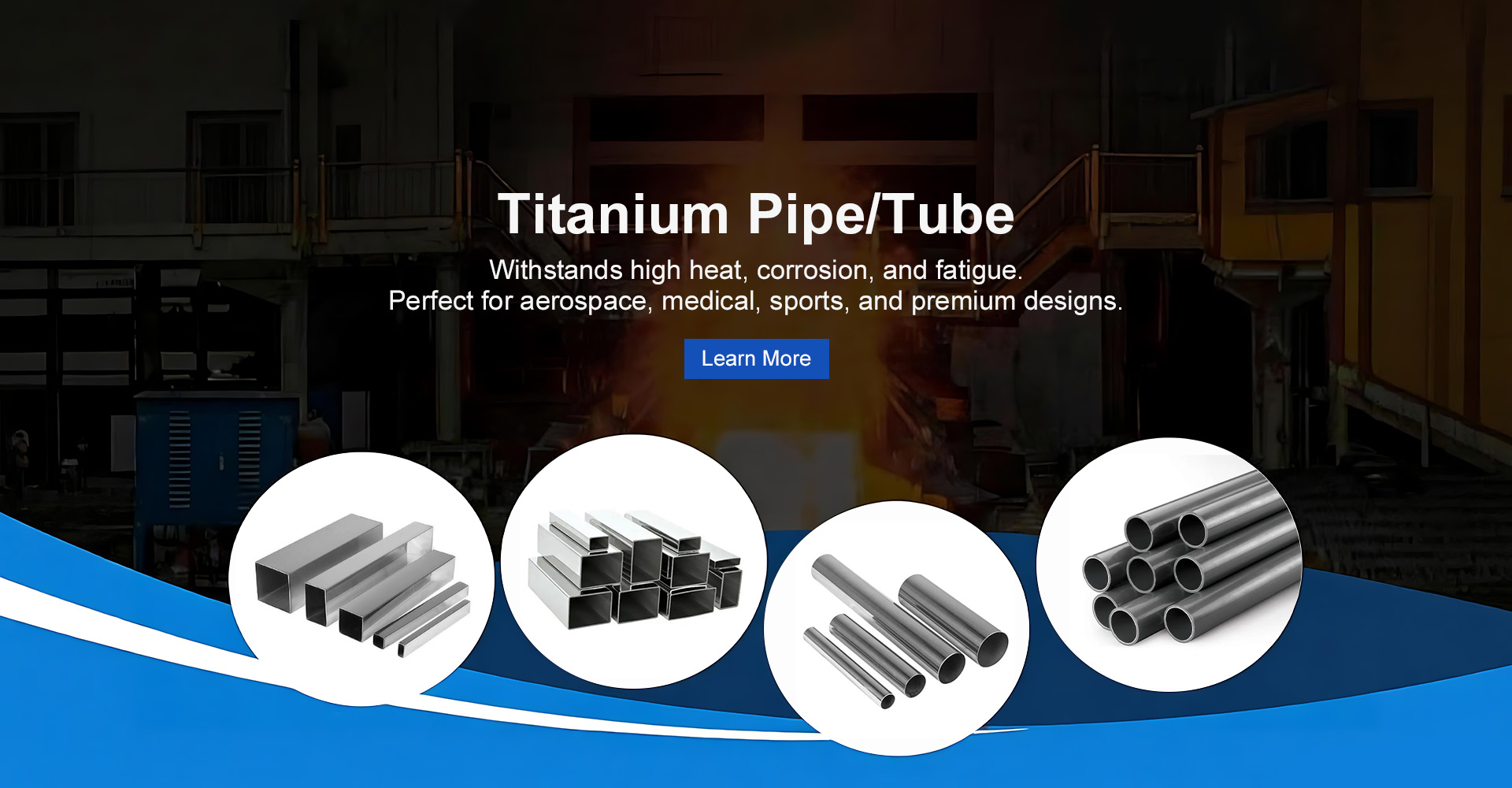
Walk onto any job site where piping is being installed, and you'll notice something interesting. The guys handling titanium tube move differently than the ones wrestling with steel tube. They're not straining as hard. They're not swearing under their breath. And later, when the welders show up, the atmosphere around the titanium work area gets noticeably quieter—more focused.
That difference in handling tells you more about these two materials than any spec sheet ever could.
Let's get into what actually separates titanium tube from steel tube—not the textbook definitions, but the real-world realities that determine whether your project sails smoothly or turns into a headache.
The Moment You Pick It Up
Here's the first truth about titanium vs steel: you can feel the difference before you even know what you're looking at.
Grab a length of titanium tube that's scheduled for the same wall thickness as its steel counterpart, and your brain does a double take. It feels… wrong. Too light. Like someone hollowed it out when you weren't looking. But it's solid. That's the density difference hitting you in real time.
Now grab the steel tube—carbon steel or stainless steel, doesn’t matter—and you immediately understand why pipefitters have strong backs. The stuff is dense. Heavy. Grounded.
For the guys on the deck of an offshore platform or the crew loading pipe onto a truck, that weight difference isn't a theoretical number. It's the difference between needing a crane and needing a buddy. It's the difference between making the weight limit on a helicopter lift and having to split the shipment.
Strength That Shows Up Differently
Here's where people get tripped up. If you ask someone on a job site which material is stronger, they'll usually point to the steel tube. And honestly? In some ways they're right.
Steel is stiffer. Plain and simple. You lean on a length of steel tube, it pushes back. You try to bend it, it fights you. That stiffness comes from a higher modulus of elasticity—fancy words for “doesn't flex easily.”
Titanium tube flexes more. Put the same load on it, and you'll see it give a little. But here's the thing people miss: flexing doesn't mean failing. In fact, in applications where vibration is a concern—like compressor stations or high-pressure pumping—that slight give can actually save your system from fatigue cracking down the road.
And when you talk about how much load the material can handle relative to its own weight? Titanium runs circles around steel. That strength-to-weight ratio is why you find titanium tube in airplanes, racing cars, and anywhere else where every pound counts.
What Happens When the Elements Get Involved
This is where the conversation usually shifts to corrosion resistance, and for good reason.
Put a piece of carbon steel tube outside in a coastal environment, and come back in a year. You'll find rust. Not surface rust, either—the kind that starts flaking off and thinning the wall. That's carbon steel doing what it naturally does: returning to the earth.
Stainless steel tube does better, but it's not invincible. In saltwater, in high-chloride environments, in tight crevices where water sits stagnant, stainless can still pit. Those little holes are where failures start.
Titanium tube just… doesn't. The protective layer that forms on its surface isn't something you apply—it's something the metal does automatically. Scratch it, and it heals. Dunk it in seawater, pull it out years later, and it still looks like the day it was installed.
There’s a story from the North Sea that gets passed around among pipeline engineers. A platform had been using carbon steel for seawater cooling lines. The pipes kept failing, the maintenance crews were constantly patching, and eventually someone made the call to switch to titanium. The crew that did the swap said the hardest part was convincing themselves they weren’t being pranked with how light the material was. Years later, those same lines are still running with zero maintenance.
The Welding Story Nobody Talks About
If you've never welded titanium tube, you probably don't understand why fabricators either love it or hate it. There's no in-between.
Welding steel tube—whether carbon steel or stainless steel—is straightforward. You clean the joint, you strike an arc, you run your bead. If you mess up, you grind it out and try again. The process is forgiving because steel is forgiving.
Titanium tube welding is a different animal entirely. The metal has an almost obsessive need for cleanliness. A fingerprint, a speck of oil, a bit of shop dust—any of it can ruin a weld. And then there's the gas shielding. With steel, you protect the weld pool from the front and you're good. With titanium, you have to shield the back of the weld too, because the moment hot titanium touches oxygen, it turns brittle.
Experienced titanium welders will tell you to watch the color of the finished weld. Bright silver or light straw means you did it right. Blue or purple means you let some contamination in—that weld is suspect. Gray or white means you might as well cut it out and start over because it's going to crack under pressure.
This isn't a knock on titanium. It's just the reality: the material demands respect, and if you give it, it'll reward you with joints that outlast everything around them.
The Money Conversation
Let's talk about what everyone wants to know but doesn't always ask: what's this going to cost?
If you look at the initial cost—what you pay the supplier for the material—titanium tube is significantly more expensive than steel tube. We're talking multiples, not percentages. A carbon steel tube is cheap. A stainless steel tube is moderate. A titanium tube is an investment.
But here's the part that gets overlooked: the lifecycle cost.
Think about what happens after the material arrives on site. With steel tube, especially carbon steel, you're painting it, wrapping it, maybe adding cathodic protection. You're building in corrosion allowance—making the walls thicker than they need to be for pressure alone because you know rust is coming. You're scheduling inspections, budgeting for repairs, planning for replacement.
With titanium tube, you install it and you're done. No painting. No corrosion allowance. No maintenance schedule. The material is lighter, so your shipping costs are lower. It's easier to handle, so your labor costs go down. It lasts longer, so your replacement cycle gets pushed so far out you might not even be running the facility when it finally needs to be changed.
A lot of project managers who initially balk at titanium pricing end up converts after they run the numbers over the full life of the installation.
Where Each One Belongs
After all that, here's how the decision usually shakes out.
Titanium tube is the right choice when:
Your fluid is aggressive—seawater, sour gas, chemicals that would eat steel for breakfast
Weight matters—offshore, aerospace, mobile equipment
You want to install it and forget about it for decades
The lifecycle cost argument wins out over initial cost
Steel tube—whether carbon steel or stainless steel—is the right choice when:
The environment is mild and corrosion isn't a major concern
Upfront budget is the primary driver
Your fabrication shop isn't set up for titanium welding
The installation has a defined, shorter lifespan
One Last Thought
The titanium vs steel debate isn't really about which material is better. It's about which material fits the job you're trying to do.
Steel has been carrying the weight of industry for generations, and it's not going anywhere. It's reliable, it's familiar, and it's affordable. Titanium is the specialist—the material you call in when conditions get tough and the stakes get high.
The smart move is knowing which situation you're in.
Navigation
 How can the service life of titanium plates be extended under harsh working conditions17/04/2026
 Chaoyang accelerates its ¥1.2B small-particle sponge titanium investment, with 50kt capacity boosting aerospace.16/04/2026
 Deeply engaged in the manufacturing of titanium equipment, we safeguard the development of the industry with advanced equipment and practical cooperation15/04/2026
 A New Chapter in Titanium Alloy Applications: Titanium Combs from Aerospace to Hair Care13/04/2026


Send Us A Message