






Titanium: The Lightweight Heavyweight That Does It All
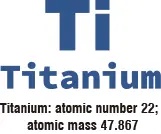
If you've ever picked up a piece of titanium, you probably had one thought: this doesn't feel right. It looks like steel, it sounds like steel, but it weighs about half as much. That confusion—the moment your brain recalibrates what “strong” can feel like—is where the magic of this metal really begins.
Titanium isn't new in the grand scheme of things. It was discovered back in 1790, but it took until 1948 for industrial production to really take off. For over a century and a half, it sat in labs as a curiosity—a metal with incredible potential that no one quite knew how to unlock at scale. Once they figured it out, titanium quickly became the go-to material for applications where failure isn't an option: jet engines, chemical plants, artificial hips, and even the roofs of iconic buildings.
What makes titanium so special? Let's walk through the properties that set it apart—not in textbook language, but in the real-world terms that matter when you're deciding whether to spec it for your next project.
How Titanium Stacks Up Against the Metals You Know
The easiest way to understand titanium is to put it next to the metals most people already have a feel for: steel and aluminum.
Here's what that table tells you in plain English:
Steel is stiff and strong, but heavy. If you need a bridge that won't budge, steel is your friend. But if you have to lift that bridge into the air, steel becomes a problem.
Aluminum is light, but soft. It's great for things that need to move, but it won't hold up under the same loads steel can handle.
Titanium sits in the sweet spot between them. It gives you strength close to steel at a weight closer to aluminum. That strength-to-weight ratio is the headline. Everything else—corrosion resistance, biocompatibility, heat tolerance—is the supporting story that makes titanium irreplaceable in certain applications.
Working With Titanium: Not as Hard as You've Heard
There's a persistent rumor in fabrication shops that titanium is impossibly difficult to work with. The truth is more nuanced.
For forming and bending, the softer grades of commercially pure titanium (like JIS Class 1 or ASTM Grade 1) behave surprisingly well. You can use the same tools, dies, and machines you'd use for low-carbon steel or stainless steel. Deep drawing—forming metal into a cup or tube shape—is actually one area where titanium excels. It doesn't work-harden as aggressively as stainless, so you can get deeper draws without intermediate annealing.
Welding is where titanium demands respect, but it's not as mysterious as some make it out to be.
Spot welding and seam welding can be done in regular shop conditions, similar to stainless steel. For TIG welding (the most common method for titanium), you do need argon shielding—not just on the top of the weld, but on the back side too. This isn't exotic; it's standard practice for any shop that regularly welds reactive metals. The key is cleanliness. Any oil, grease, or oxide on the surface can cause embrittlement, but a clean joint and proper gas coverage produce welds that are actually more corrosion-resistant than the base metal.
One often-overlooked advantage: welded titanium joints don't suffer from the stress corrosion cracking that can plague stainless steel in chloride environments. In marine or chemical applications, that's a big deal.
The Economics: Why Expensive Upfront Can Be Cheaper in the Long Run
Let's address the elephant in the room. Titanium costs more per kilogram than steel. Sometimes a lot more—20 to 40 times more than carbon steel, depending on the grade and form.
But focusing on price per kilogram misses the point. Smart buyers look at three things:
1. Density adjusts the math.
Because titanium is about half the density of steel, a cubic meter of titanium costs less than twice as much as a cubic meter of steel—even though the per‑kilogram price gap is huge. For applications where volume matters more than weight, that narrows the gap.
2. You can use less of it.
Titanium's high strength-to-weight ratio and superior corrosion resistance mean you can often use thinner gauges than steel would require. A titanium roof panel, for example, can be lighter than a steel panel doing the same job, which reduces structural support requirements.
3. Lifecycle costs tell the real story.
This is where titanium shines. A steel component needs coatings, regular inspection, and eventual replacement in corrosive environments. A titanium component? Install it and walk away.
Take building exteriors: titanium roofs and exterior walls have been used on landmark buildings for decades. The material never needs painting, never rusts, and shrugs off salt spray in coastal locations. The lifecycle cost savings—from reduced maintenance, eliminated repainting, and avoided premature replacement—often exceed the higher initial cost.
Similarly, in chemical plants and offshore platforms, titanium heat exchangers and piping can outlast the facility itself. The upfront premium pays for itself in avoided downtime and maintenance labor.
The Titanium Family: Not All Grades Are the Same
If you think of titanium as a single material, you're missing a lot. The titanium family includes several distinct categories, each with its own personality.
Commercially Pure Titanium (JIS Class 1–4 / ASTM Grade 1–4)
These grades are titanium with minimal alloying. They're classified by oxygen and iron content, which affect strength.
Grade 1 (Class 1): The softest and most formable. If you're deep drawing or bending complex shapes, this is your choice.
Grade 4 (Class 4): The strongest of the commercially pure grades, with tensile strength around 700 MPa. It's a good middle ground when you need more strength but still want decent formability.
Low-Alloy Corrosion-Resistant Titanium
Adding a small amount of palladium (like Ti-0.15Pd) pushes corrosion resistance even higher. These grades are used in the most aggressive chemical environments where even standard titanium might show some attack.
Alpha (α) Type Titanium Alloys
Alloys like Ti-5Al-2.5Sn fall into this category. They're known for creep resistance at elevated temperatures and excellent weldability. If you're building something that will see sustained heat—like jet engine components—this is where you look.
Alpha-Beta (α+β) Type Titanium Alloys
This is the workhorse category, and Ti-6Al-4V is the undisputed king. It's the most widely used titanium alloy in the world—found in aerospace, medical implants, automotive, and sporting goods.
These alloys respond to heat treatment (age-hardening) to achieve high strength. The trade-off? They're difficult to cold-form. If you need complex shapes, you're usually machining them from bar or plate rather than stamping.
Nippon Steel has developed proprietary alloys in this category as well, including Ti-5Al-1Fe and Ti-5Al-2Fe-3Mo—variants that offer different processing characteristics while maintaining high performance.
Beta (β) Type Titanium Alloys
Beta alloys—like Ti-15V-3Al-3Cr-3Sn—are the most formable of the high-strength titanium grades. They can be cold-worked, then heat-treated to achieve strengths comparable to α+β alloys. This combination of formability and strength makes them attractive for complex parts that need to be strong.
Nippon Steel's Ti-20V-4Al-1Sn is another example in this category, designed for applications that need a unique balance of cold workability and final strength.
Beyond Metal: The Titanium You Use Every Day
Here's a fact that surprises most people: about 95% of titanium consumed globally isn't metal at all. It's titanium dioxide (TiO₂)—a brilliant white pigment that shows up in:
The paint on your walls
The sunscreen on your skin
The toothpaste in your bathroom
The candy in your pantry
Self-cleaning glass on modern buildings
Titanium dioxide doesn't just add whiteness. It's chemically stable, non-toxic, and absorbs UV light without breaking down. That's why it's the pigment of choice for everything from premium house paints to sunscreens.
The global titanium dioxide market is enormous—pushing toward $30 billion—and it's a reminder that titanium touches our lives in ways most of us never think about.
Putting It All Together
If you take one thing away from this, it should be this: titanium is the material you choose when the job demands something ordinary metals can't deliver.
You choose it when weight matters but strength can't be compromised.
You choose it when corrosion would eat steel alive.
You choose it when you need a material that won't react with the human body.
You choose it when you're designing for a lifecycle measured in decades, not years.
Yes, it costs more upfront. Yes, welding requires discipline. Yes, machining is slower. But in the applications where titanium is the right choice, nothing else comes close.
It took over 150 years from discovery to industrial production. Now, titanium has earned its place as one of the most versatile and valuable metals we have—not because it's the strongest or the lightest, but because it''s the only one that combines all of these properties in a single package.
Navigation
 How can the service life of titanium plates be extended under harsh working conditions17/04/2026
 Chaoyang accelerates its ¥1.2B small-particle sponge titanium investment, with 50kt capacity boosting aerospace.16/04/2026
 Deeply engaged in the manufacturing of titanium equipment, we safeguard the development of the industry with advanced equipment and practical cooperation15/04/2026
 A New Chapter in Titanium Alloy Applications: Titanium Combs from Aerospace to Hair Care13/04/2026

Send Us A Message