






Is Titanium Rarer Than Gold? Here’s Why So Many People Get It Wrong
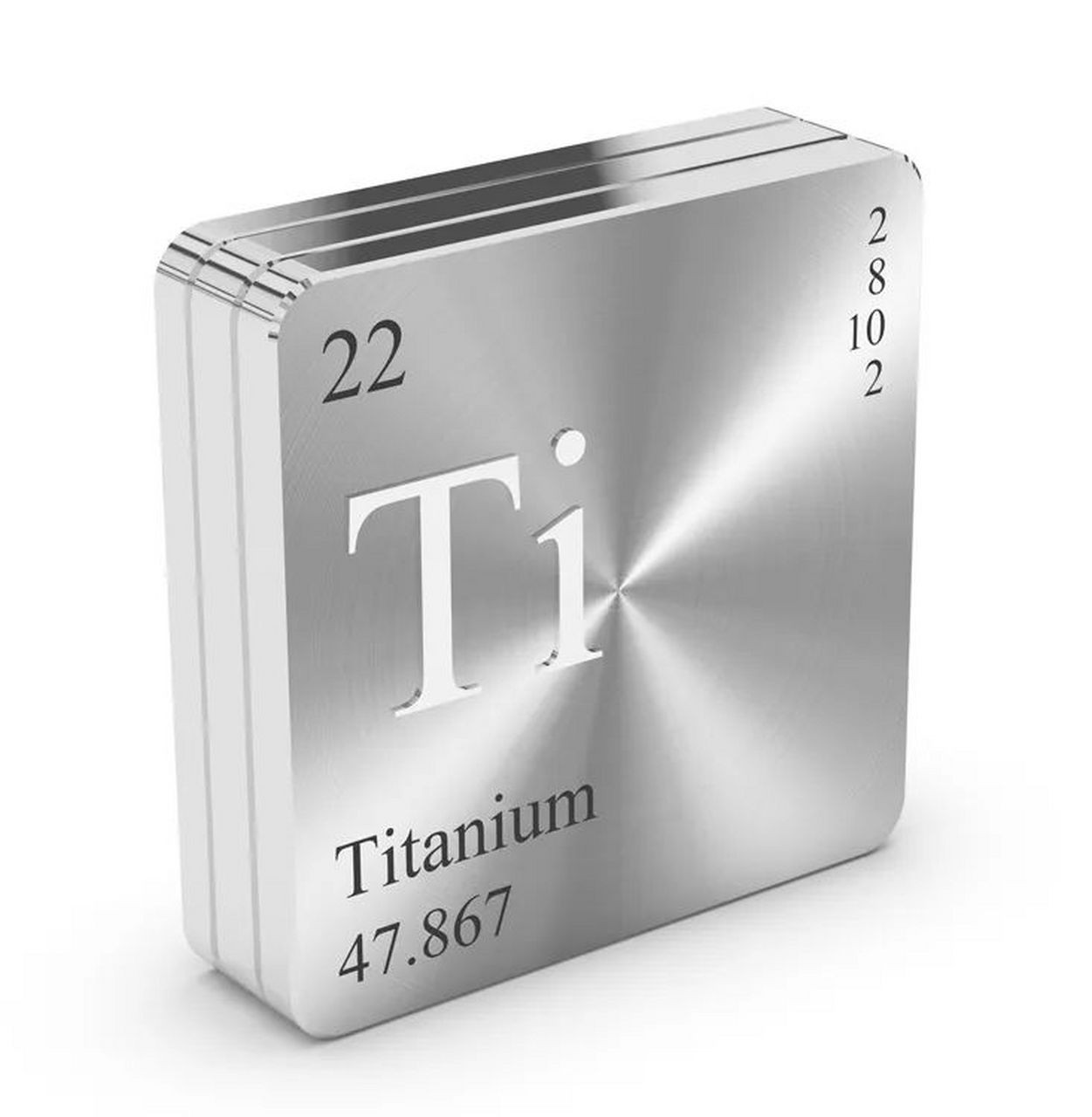
If someone asked you to name a rare, precious metal, gold would probably be the first thing that comes to mind. It's been the ultimate symbol of wealth and scarcity for thousands of years. Titanium, on the other hand, feels exotic too—it's used in fighter jets, spacecraft, luxury watches, and even artificial hips. Surely something that high-tech and expensive must be rare, right?
Actually, no.
The truth is almost the exact opposite: titanium is one of the most common metals on Earth, while gold is genuinely scarce.
So why does titanium seem so rare? And how did this misconception start? Let's dig into the numbers and the history behind these two metals—and figure out why “rare” means something completely different for each of them.
What the Earth's Crust Tells Us
If we want to know how rare a metal really is, the best place to start is the ground beneath our feet. Geologists have mapped out the abundance of every element in the Earth's crust, and the numbers tell a very clear story.
Let's put that in perspective. For every single atom of gold you might find in a random scoop of earth, there are more than 1.4 million atoms of titanium sitting right next to it.
In fact, titanium is the ninth most abundant element in the Earth's crust overall, and the fourth most abundant metal—beaten only by aluminum, iron, and magnesium. Gold, by contrast, is so scarce that it ranks near the very bottom of the list, hanging out with platinum and other precious metals.
If this were a contest about who's rarer, gold would win by a landslide.
Why Titanium Feels Rare Even Though It Isn't
If titanium is so common, why does it cost so much? Why aren't we building everything out of this wonder metal?
The answer comes down to one word: extraction.
Gold is one of the few metals that can be found in nature in its pure, metallic form. If you're lucky enough to find a gold nugget, you've already got usable gold—just melt it down and shape it. The challenge with gold isn't the processing; it's the finding.
Titanium is the opposite. You'll never find a chunk of pure titanium lying on the ground. It's always locked up in minerals like ilmenite and rutile, tightly bonded with oxygen. To get titanium metal, you have to:
Mine these titanium-bearing ores (easy enough—there's plenty)
Chemically separate the titanium dioxide from the surrounding rock
Run it through the energy-intensive Kroll process, which converts it to titanium tetrachloride and then reduces it with magnesium at extremely high temperatures
Melt the resulting “titanium sponge” in a vacuum to create usable ingots
Every step consumes huge amounts of energy and requires specialized equipment. The Kroll process hasn't changed much since it was invented in the 1930s, which is why titanium metal remains expensive even though the raw material is abundant.
So here's the distinction: geological rarity (how much exists) and economic rarity (how hard it is to obtain) are two very different things. Gold is geologically rare. Titanium is economically rare.
What the Production Numbers Say
If titanium were truly rare, we wouldn't be able to produce very much of it. But here's what global production looks like:
Titanium (titanium sponge): around 330,000 metric tons per year
Gold: around 780 metric tons per year
We produce more than 400 times more titanium than gold by weight every single year. That's not the sign of a scarce metal—that's the sign of a metal that's abundant but just takes work to get out of the ground.
And here's another number: known global reserves of titanium ore are so vast that, at current production rates, we have over 600 years' worth left to mine. Gold reserves, by contrast, are measured in decades, not centuries.
The Price Difference: When “Rare” Doesn't Mean Expensive
This is where the confusion really takes hold. If titanium is so common, why does it cost more than steel? And if gold is so rare, why isn't it even more expensive than it already is?
Let's look at the rough numbers (as of late 2025):
Gold is about 5,000 times more expensive than titanium by weight.
That's the real-world impact of geological rarity. Gold is genuinely scarce, so even a tiny amount commands a huge price. Titanium is abundant, so even though processing it is expensive, the raw material cost remains low.
But here's the nuance: titanium products can still be expensive because fabrication is difficult. Machining titanium is slow, welding it requires specialized skills, and tooling wears out fast. When you buy a titanium watch or a titanium bike frame, you're paying for the craftsmanship and processing—not because the metal itself is rare.
The Titanium You Use Every Day (Without Knowing It)
Here's a twist that surprises most people: about 95% of all titanium consumed globally isn't metal at all. It's titanium dioxide (TiO₂)—a bright white pigment that shows up in:
The paint on your walls (that brilliant white coverage)
Your sunscreen (physical UV protection)
Your toothpaste (whitening)
Plastics, paper, and even some candies
This form of titanium is cheap, abundant, and touches your life daily. It doesn't require the energy-hungry Kroll process—just mining, crushing, and simple chemical purification.
So when we talk about titanium “rarity,” it's worth remembering: the titanium you see (the metal) is only about 5% of the story. The other 95% is a humble white pigment sitting in your bathroom cabinet.
Where the “Titanium Is Rare” Myth Comes From
If titanium is so common, why do so many people think it's rare? A few reasons:
1. It was genuinely hard to produce for a long time. Industrial titanium production only really took off in 1948. Before that, it was a lab curiosity. That history stuck.
2. It's used in high-end applications. Fighter jets, spacecraft, medical implants—these feel exotic, and we naturally associate exotic with rare.
3. Marketing. Watch brands, jewelry makers, and high-end gear companies love calling titanium “rare” or “precious.” It sounds better than “common but difficult to work with.”
4. Price confusion. Titanium products are expensive, and people instinctively assume expensive = rare. But with titanium, expensive comes from processing difficulty, not scarcity.
A Quick Side-by-Side Comparison
So, Is Titanium Rarer Than Gold?
No. Not even close.
Titanium is one of the most abundant metals in the Earth's crust. Gold is one of the scarcest.
The confusion exists because titanium is hard to extract and expensive in its metal form, which makes it feel rare. But feeling rare and being rare are two completely different things.
If you're holding a titanium watch or a titanium bike frame, you're not holding a scarce resource—you're holding a common metal that someone put a lot of skill and effort into shaping. That skill has value, absolutely. But the metal itself is anything but rare.
Gold, by contrast, is genuinely scarce. Every ounce of it took millions of tons of rock to produce. That geological rarity—combined with thousands of years of cultural significance—is what makes gold the benchmark of value it is today.
The Bottom Line
Titanium isn't rare—it's the fourth most common structural metal on the planet. What makes it special isn't scarcity, but the remarkable combination of strength, lightness, and corrosion resistance that comes from its chemistry.
Gold is rare. Genuinely, objectively rare. That rarity, paired with its beauty and chemical stability, has made it humanity's most enduring store of value.
So next time someone asks you whether titanium is rarer than gold, you can tell them: not by a long shot. One is hiding in plain sight, waiting to be processed. The other has been chased by kings and prospectors for millennia—because there's just not that much of it to go around.
Navigation
 How can the service life of titanium plates be extended under harsh working conditions17/04/2026
 Chaoyang accelerates its ¥1.2B small-particle sponge titanium investment, with 50kt capacity boosting aerospace.16/04/2026
 Deeply engaged in the manufacturing of titanium equipment, we safeguard the development of the industry with advanced equipment and practical cooperation15/04/2026
 A New Chapter in Titanium Alloy Applications: Titanium Combs from Aerospace to Hair Care13/04/2026


Send Us A Message