






The Global Titanium Elbow Market: Navigating Trends in Lightweight Engineering and Corrosion Resistance
Introduction
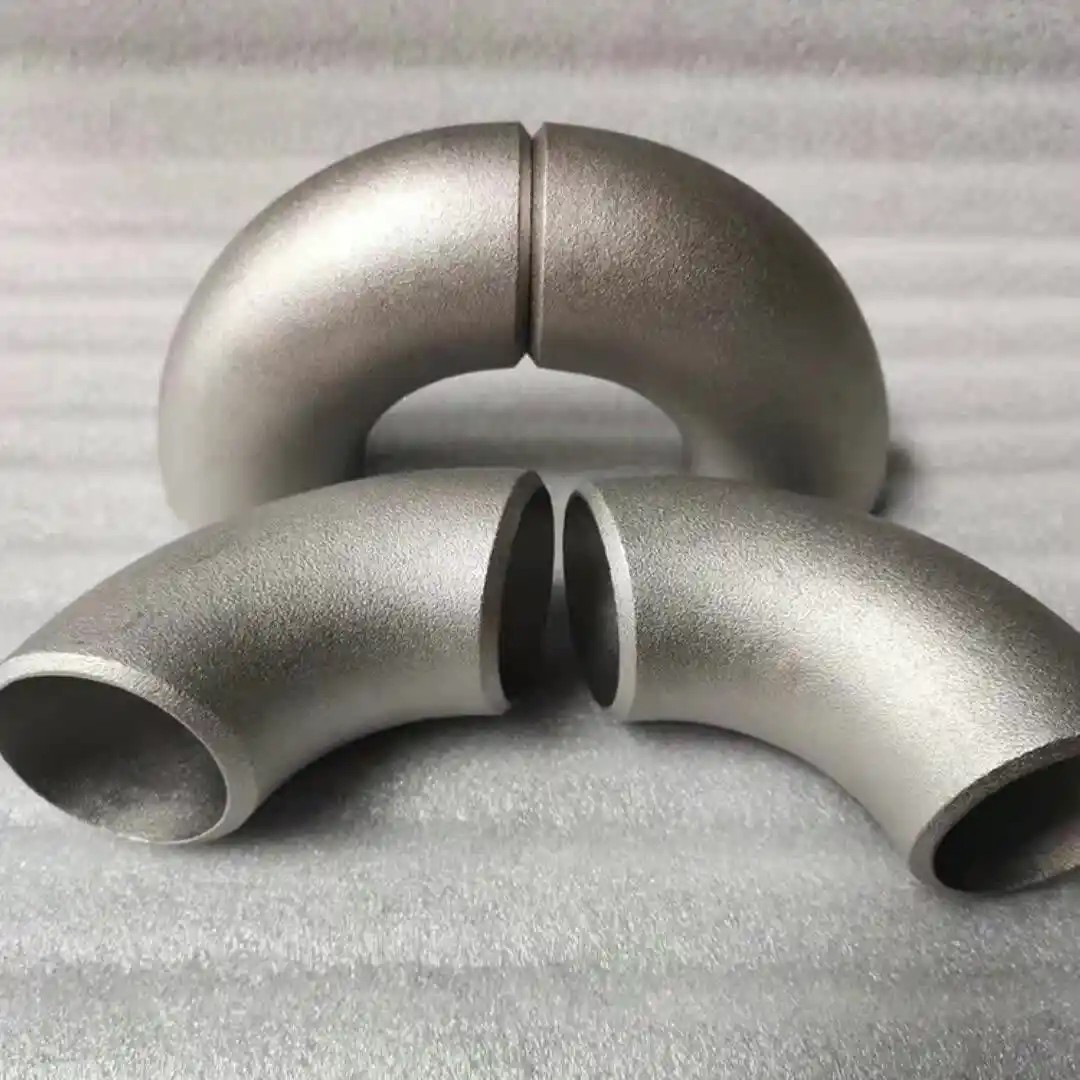
In the hierarchy of industrial piping components, the humble elbow is often overlooked. Yet, for industries ranging from aerospace fuel systems to offshore marine platforms, the titanium elbow has become a critical component in the battle against corrosion, weight, and extreme temperatures. As we move through the current decade, the titanium alloy fitting market is not just growing; it is undergoing a technological metamorphosis.
While the global titanium alloy fitting market was valued at approximately USD 1.5 billion in 2024 and is projected to approach USD 2.5 billion by 2033, the specific segment of titanium elbows is outpacing general averages due to niche demands for customized angles and high-strength configurations.
1. The Metallurgical Landscape: Beyond Grade 2
Historically, Commercial Pure Titanium (Grades 1 and 2) dominated the elbow market due to their formability and exceptional corrosion resistance in chemical processing. However, the current trend shows a significant pivot towards alpha-beta and near-beta titanium alloys.
The Rise of Ti-6Al-4V and Grade 7
The demand for Ti-6Al-4V (Grade 5) elbows is surging, particularly in aerospace hydraulic lines and high-performance automotive exhaust systems. This alloy offers a strength-to-weight ratio that allows for thinner walls without compromising burst pressure. Concurrently, Grade 7 (UNS R52400) elbows, stabilized with palladium, are becoming the standard for the most aggressive chemical environments, offering unparalleled resistance to reducing acids.
Small Diameter, High Precision
There is a noticeable market shift towards small bend radius titanium elbows. In compact engine bays and crowded offshore skids, space is a premium. Manufacturers are now utilizing advanced hydroforming techniques to produce tight radius elbows with centerline radii (CLR) as low as 1D (1 times the diameter). Recent advancements in hydroforming optimization—using response surface methodology to calibrate internal pressure (e.g., 12.164 MPa) and axial feeding (e.g., 7 mm)—have successfully mitigated wrinkling and excessive thinning in these challenging geometries. -7
2. Manufacturing Revolution: Additive and Precision Forming
The way titanium elbows are made is changing faster than the materials themselves.
Additive Layer Manufacturing (ALM) Takes Flight
The most groundbreaking development in recent years has been the validation of 3D printed titanium elbows for critical flight hardware. In early 2026, Airbus Defence and Space confirmed the production of double-walled titanium elbows for the A400M fuel system using Additive Layer Manufacturing. This is not just prototyping; it is serial production. ALM allows for complex geometries—like double walls or integrated mounting flanges—that are impossible to achieve with traditional mandrel bending. This trend is expected to trickle down from defense into commercial aerospace and high-end automotive, reducing lead times drastically.
Hydroforming vs. Hot Forming
While 3D printing handles complexity, hydroforming is winning the battle for cost-effective, seamless small-radius elbows in medium volumes. The ability to use internal fluid pressure to form the elbow in a die results in superior grain flow and residual stress distribution compared to traditional press forming. This is particularly critical for pure titanium (TA2) exhaust components where fatigue life is paramount.
3. Application-Specific Trends Driving Demand
Aerospace: The Weight Savings Imperative
With global air passenger numbers expected to reach 8.2 billion by 2037, OEMs are under pressure to produce lighter, fuel-efficient aircraft . Every pound saved in the plumbing system translates to significant fuel savings over the lifecycle of an aircraft. Titanium butt weld elbows are replacing heavier stainless steel and nickel alloy components in pneumatic ducts and fuel lines. The adoption of ASME SB16.9 and ASTM B363 standards ensures these components can withstand the extreme vibrations and pressure cycles of modern turbine engines.
Marine and Offshore: The Sour Service Solution
In the oil and gas sector, the shift towards sour service (high H2S environments) and deep-water drilling is driving specifications towards NACE MR0175 compliant materials. Titanium's natural resistance to chloride stress corrosion cracking makes it superior to duplex stainless steels. Titanium flanged elbows and socket weld elbows are increasingly specified for top-side and subsea piping systems where maintenance is prohibitively expensive.
Automotive Aftermarket: Aesthetics Meets Performance
The automotive sector, particularly the performance aftermarket, continues to be a volume driver for titanium exhaust elbows. The distinctive blue and purple hues that develop on titanium when heated have become a status symbol in the tuner community. Beyond aesthetics, the lightweight nature of Grade 2 titanium elbows—roughly 40% lighter than steel—reduces unsprung and overall vehicle weight, contributing to faster acceleration and better fuel economy. The availability of mandrel bends and slip-joint connectors in 1.5" to 4" diameters caters specifically to this market.
4. The Supplier Ecosystem: East vs. West
The supply chain for titanium elbows is distinctly bipolar.
On one side, you have integrated giants like VSMPO-AVISMA and TIMET, which control the raw material supply and supply to prime aerospace contractors . On the other, specialized fabricators—particularly in China's “Titanium Valley” (Baoji)—have become extremely agile in producing custom titanium threaded elbows and non-standard angles at competitive prices.
However, the market is seeing a consolidation of quality. Top-tier Chinese suppliers like Shaanxi Taichen Titanium Industry is now holding AS9100 and ASME certifications, blurring the line between "cost-effective" and "aerospace-grade." This allows global EPC (Engineering, Procurement, and Construction) firms to source titanium pipe fittings—including reducers, tees, and elbows—from a single, certified source.
5. Standards and Compliance: The Language of Trust
For B2B buyers, the conversation around titanium elbows always returns to standards. The industry is seeing a stricter enforcement of dimensional tolerances.
ASME B16.9 remains the universal language for factory-made wrought butt-welding fittings, dictating critical dimensions like outside diameter and center-to-face measurements.
ASTM B363 governs the chemical composition and mechanical properties of the fittings based on the raw material (e.g., UNS R50400 for Grade 2).
There is a rising demand for NORSOK M-650 certification for offshore applications in the North Sea, requiring manufacturers to demonstrate a high level of process qualification.
Buyers are increasingly requiring electrochemical etching of parts per ASME standards, ensuring full traceability from the ingot to the installed fitting.
6. Challenges on the Horizon
Despite the optimistic growth trajectory, the market faces headwinds. The volatility of titanium sponge prices—influenced by geopolitical tensions in key producing regions—makes long-term contract pricing difficult. Furthermore, the machinability of titanium remains a challenge; it requires rigid tooling and high pressure, leading to higher production costs compared to copper-nickel or steel fittings. This cost barrier limits its adoption in price-sensitive commercial construction projects.
Conclusion: The Future is Alloy-Specific and Application-Engineered
The titanium elbow is no longer a generic commodity. The future belongs to suppliers who can offer engineering support—helping clients choose between a standard Grade 2 90° elbow for a chemical plant and a 3D-printed Ti-6Al-4V complex geometry elbow for a UAV hydraulic system.
As manufacturing technologies like additive layer manufacturing and precision hydroforming mature, the cost of complexity will drop. We will likely see a proliferation of hybrid elbows—components that combine the corrosion resistance of titanium with internal lattice structures for weight reduction or embedded sensors for smart monitoring.
For engineers and procurement specialists, the message is clear: the options for titanium elbows are expanding beyond the catalog. Customization, certification, and performance optimization are the new norms in this high-stakes market.
Navigation
 How can the service life of titanium plates be extended under harsh working conditions17/04/2026
 Chaoyang accelerates its ¥1.2B small-particle sponge titanium investment, with 50kt capacity boosting aerospace.16/04/2026
 Deeply engaged in the manufacturing of titanium equipment, we safeguard the development of the industry with advanced equipment and practical cooperation15/04/2026
 A New Chapter in Titanium Alloy Applications: Titanium Combs from Aerospace to Hair Care13/04/2026


Send Us A Message