






Shaping the Future: Breakthroughs in Titanium Profiles Transform Medical, Energy, and Industrial Manufacturing
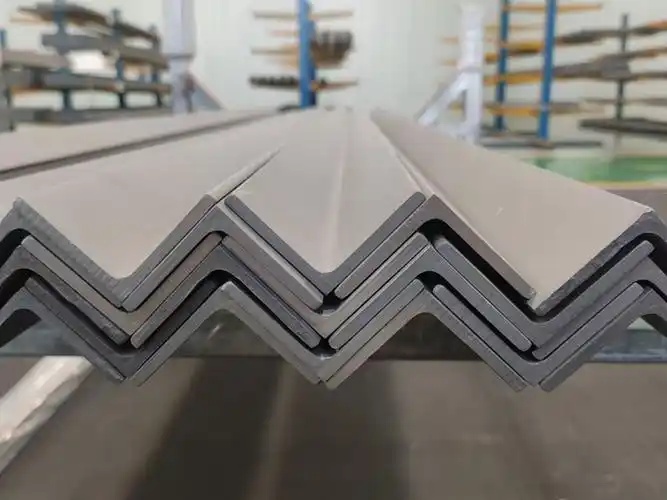
Dateline: February 26, 2026 – The global titanium alloy profiles market is undergoing a profound transformation, driven by revolutionary manufacturing technologies, expanding applications across critical industries, and growing emphasis on sustainability. Valued at approximately US$ 17,850 million in 2024, the titanium alloy profiles market is projected to reach US$ 29,600 million by 2032, growing at a compound annual growth rate (CAGR) of 6.1% . This growth reflects titanium profiles' evolution from traditional structural components to enablers of next-generation medical, energy, and industrial innovation.
Manufacturing Innovation: Advanced Extrusion and Forming Technologies
Precision Extrusion Enables Complex Geometries
At the heart of titanium profile advancement lies sophisticated titanium extrusion technology, which enables production of intricate cross-sectional shapes with exceptional precision and material efficiency. The extrusion process involves heating a titanium billet to precise temperatures and forcing it through a die using hydraulic presses ranging from 1,500 to 12,000 tons of force, creating continuous profiles that can be cut to required lengths .
Modern extrusion facilities employ computer-controlled heating systems and real-time monitoring to maintain the tight temperature windows essential for titanium processing. Unlike steel or aluminum, titanium requires specialized lubrication systems and die materials to prevent galling and ensure surface quality. Recent advancements in glass-based lubricants and ceramic-coated dies have significantly improved production yields and surface finish .
The versatility of extrusion produces a comprehensive range of products including rods, bars, channels, angles, I-beams, and custom-engineered sections for demanding applications . This capability to create complex shapes while maintaining titanium's exceptional properties—strength-to-weight ratio, corrosion resistance, and biocompatibility—makes extrusion ideal for components requiring both intricate design and reliable performance .
Cold Forming and Bending Technologies
Beyond extrusion, significant progress in titanium cold forming and bending technologies has expanded design possibilities for titanium profiles. Titanium's tendency to spring back and work-harden during cold working has historically limited forming options, but advanced finite element modeling and specialized tooling now enable precise bending of titanium sections for architectural, automotive, and industrial applications .
Rotary draw bending with mandrel support, previously challenging for titanium, now achieves tight radii without wrinkling or collapse through optimized tool geometries and lubricants. Three-roll bending systems accommodate larger sections for structural applications, while stretch forming produces compound curves for automotive and marine components .
Additive Manufacturing for Custom Profiles
While extrusion dominates high-volume production, additive manufacturing titanium profiles enables unprecedented design freedom for custom and low-volume applications. Directed Energy Deposition (DED) and powder bed fusion technologies allow fabrication of titanium profiles with internal features, variable wall thicknesses, and organic geometries impossible to achieve through conventional methods .
For medical applications, this capability proves transformative. Custom orthopedic implants can now be designed from patient scan data and manufactured with porous structures that promote bone ingrowth while matching patient-specific anatomy. Surgical guides and instruments benefit from lightweight, patient-matched designs that improve surgical precision and outcomes .
Medical Applications: Transforming Patient Care
Orthopedic Implants Drive Demand
The medical sector represents one of the fastest-growing markets for titanium profiles, driven by titanium's unique combination of biocompatibility, mechanical properties, and corrosion resistance. The global orthopedic implants market, valued at approximately $45 billion, relies heavily on titanium components for load-bearing applications that must function reliably within the human body for decades .
Titanium orthopedic profiles serve critical functions in hip and knee replacements, spinal fixation systems, trauma fixation plates, and bone screws. Unlike stainless steel, titanium's modulus of elasticity more closely matches that of natural bone, reducing stress shielding and promoting better long-term outcomes. Its osseointegration capability—the ability to bond directly with living bone—makes it the material of choice for cementless implants that achieve biological fixation .
Recent innovations include titanium profiles with engineered surface textures that enhance bone attachment, and porous titanium structures that mimic trabecular bone architecture. These advanced profiles enable implants that achieve stronger, more physiological fixation while reducing weight compared to solid alternatives .
Surgical Instruments and Medical Devices
Beyond implants, titanium medical profiles increasingly appear in surgical instruments and medical devices. Titanium's strength, light weight, and non-magnetic properties make it ideal for precision instruments used in minimally invasive surgery, where reduced instrument weight lessens surgeon fatigue during lengthy procedures .
In neurosurgery, titanium profiles form retractor systems and instrument shafts that must combine strength with the ability to be visualized under intraoperative imaging. Dental implant systems rely on precision-machined titanium profiles for abutments and prosthetic components that must withstand masticatory forces while maintaining gingival health .
Regulatory Landscape and Quality Standards
Medical applications demand rigorous quality systems and regulatory compliance. Titanium profiles for implantable devices must meet ASTM and ISO specifications, with strict control over chemistry, microstructure, and mechanical properties. Manufacturing facilities maintain ISO 13485 certification and undergo regular audits by regulatory authorities and medical device customers .
The trend toward value-based healthcare and improved patient outcomes continues driving innovation in titanium medical profiles. Manufacturers increasingly collaborate with implant designers early in development to optimize profiles for specific applications, balancing mechanical performance with manufacturability and cost .
Energy Sector: Enabling Clean Technology Transition
Hydrogen Energy Systems
The global transition to clean energy creates substantial opportunities for titanium profiles in hydrogen production, storage, and utilization systems. Titanium's exceptional corrosion resistance proves essential in electrolyzers that produce green hydrogen from water, where acidic electrolytes and oxidizing conditions rapidly degrade conventional materials .
Titanium profiles for hydrogen applications include bipolar plates for proton exchange membrane electrolyzers, current collectors, and structural components for electrolysis stacks. These components must combine corrosion resistance with electrical conductivity and mechanical strength—a combination titanium uniquely provides .
In hydrogen storage and distribution, titanium profiles serve in high-pressure fittings and valves where material compatibility with hydrogen environments is critical. Unlike some steels, titanium resists hydrogen embrittlement, maintaining mechanical integrity under demanding service conditions .
Geothermal and Renewable Energy Systems
Geothermal power generation presents another growth frontier for titanium profiles. Geothermal brines contain aggressive dissolved solids and gases at elevated temperatures, creating corrosive environments that rapidly attack conventional materials. Titanium's resistance to chlorides, sulfides, and acid gases makes it the material of choice for wellhead components, heat exchangers, and piping systems .
Concentrated solar power plants increasingly specify titanium profiles for heat transfer components exposed to high-temperature heat transfer fluids. The combination of corrosion resistance, high-temperature strength, and long-term reliability justifies titanium's premium cost in these critical applications where failure would result in extended downtime .
Oil and Gas Downhole Applications
While the energy transition progresses, conventional oil and gas production continues demanding titanium profiles for challenging environments. High-pressure, high-temperature wells with corrosive constituents—hydrogen sulfide, carbon dioxide, and chlorides—rapidly degrade steel components, creating opportunities for titanium alternatives .
Titanium alloy profiles for downhole applications include tubing hangers, completion equipment, and instrument housings that must maintain integrity under extreme pressures and temperatures while resisting corrosion. Titanium's non-magnetic properties prove valuable in measurement-while-drilling tools that require accurate magnetic readings unaffected by tool materials .
Industrial Applications: Performance Under Pressure
Chemical Processing and Heat Exchangers
The chemical processing industry remains a substantial consumer of titanium profiles, particularly for heat exchanger applications where corrosion resistance and thermal performance are paramount. Titanium heat exchanger profiles include tubes, tubesheets, and baffles for shell-and-tube exchangers, as well as plates for plate-and-frame designs .
In chlorine production, titanium components withstand the aggressive oxidizing environment of wet chlorine gas and hypochlorite solutions. Pharmaceutical manufacturing relies on titanium profiles for reactors and piping systems where product purity requires materials that resist corrosion and prevent contamination .
Pulp and paper bleaching operations increasingly adopt titanium profiles for components exposed to chlorine dioxide and other aggressive bleaching chemicals. The extended service life compared to alternative materials reduces maintenance costs and unplanned downtime .
Marine and Offshore Engineering
Marine environments present among the most corrosive conditions for engineering materials, and titanium profiles excel in seawater applications. Titanium marine profiles serve in desalination plants, where resistance to chloride stress corrosion cracking ensures reliable operation in high-temperature brine environments .
Offshore oil and gas platforms utilize titanium profiles for seawater piping systems, firewater deluge systems, and ballast water treatment components. Titanium's resistance to biofouling reduces maintenance requirements compared to copper-nickel alloys, while its erosion resistance handles high-velocity seawater flows .
Naval vessels incorporate titanium profiles for propulsion shafting, heat exchangers, and components exposed to seawater. The combination of corrosion resistance, strength, and non-magnetic properties proves valuable for mine countermeasures vessels and other specialized applications .
Automotive and Performance Vehicles
The automotive sector, particularly high-performance and luxury vehicles, increasingly adopts titanium profiles for weight reduction and performance enhancement. Titanium automotive profiles appear in exhaust systems, where titanium's high-temperature strength and corrosion resistance enable lighter, longer-lasting components than stainless steel alternatives .
Suspension components benefit from titanium's high strength-to-weight ratio, reducing unsprung mass and improving handling response. Connecting rods and valve springs in racing engines utilize titanium profiles to reduce reciprocating mass, enabling higher engine speeds and improved performance .
Electric vehicles present emerging opportunities for titanium profiles in battery enclosures and structural components, where weight reduction directly translates to increased range. While cost remains a barrier to widespread adoption, premium and performance electric vehicles increasingly specify titanium for critical components .
Architectural and Design Applications
Structural and Cladding Systems
Architects and designers increasingly specify titanium architectural profiles for prestigious projects requiring distinctive aesthetics combined with longevity. Titanium's naturally forming oxide layer produces a range of colors depending on thickness, from silver through gold to deep blue, enabling unique architectural expressions without applied coatings .
The Guggenheim Museum Bilbao demonstrated titanium's architectural potential, and subsequent projects have adopted titanium profiles for curtain walls, roofing, and decorative elements. Titanium's corrosion resistance ensures these installations maintain their appearance for decades without maintenance, justifying the material premium through reduced lifecycle costs .
Bridge expansion joints and marine structures benefit from titanium profiles' corrosion resistance in aggressive environments. Pedestrian bridges in coastal locations increasingly incorporate titanium handrails and structural elements to eliminate maintenance requirements associated with painted steel or weathering steel in salt-laden atmospheres .
Interior Design and Furniture
Beyond exterior applications, titanium profiles appear in high-end interior design and furniture. Titanium furniture profiles provide lightweight strength for tables, chairs, and shelving systems, while the material's natural surface finish offers distinctive aesthetics appreciated by designers .
Lighting fixtures utilize titanium profiles for heat dissipation in LED systems, combining functional thermal management with visual appeal. Bathroom and kitchen fittings benefit from titanium's corrosion resistance and biocompatibility, ensuring long-term performance in wet environments .
Sustainability and Circular Economy
Titanium Recycling and Environmental Benefits
Environmental considerations increasingly influence titanium profile development and specification. Titanium is 100% recyclable without degradation of properties, and recycled titanium requires approximately 95% less energy than primary production from ore . This recyclability enhances titanium's sustainability profile and supports circular economy objectives.
Recycled titanium profiles are increasingly available, with manufacturers developing closed-loop systems that capture manufacturing scrap and recycle it back into production. Medical and industrial customers, historically requiring 100% virgin material for certified applications, increasingly accept recycled content for non-critical components and are exploring certification pathways for recycled material in demanding applications .
Lifecycle Cost Advantages
While titanium profiles carry higher initial costs than competing materials, lifecycle cost analysis increasingly favors titanium in applications where maintenance, replacement, or downtime costs are significant. In chemical processing, marine, and infrastructure applications, titanium's extended service life often results in lower total cost of ownership despite higher acquisition costs .
This lifecycle perspective gains traction as owners and operators recognize the true costs of maintenance, inspection, and replacement. Titanium profiles specified for 30-year design lives without maintenance compare favorably to materials requiring regular painting, inspection, and eventual replacement .
Market Dynamics and Regional Development
Asia-Pacific Leadership
The Asia-Pacific region dominates titanium profile consumption, driven by expanding industrial capacity and infrastructure investment. China leads in both production and consumption, with significant capabilities in extrusion, forging, and precision machining. Japanese manufacturers maintain strong positions in high-end medical and industrial applications, while South Korea's shipbuilding industry drives marine titanium demand .
India represents a growth frontier, with government initiatives promoting domestic manufacturing and infrastructure development creating opportunities for titanium profiles. Recent collaborations between Indian and international titanium producers aim to develop local capabilities for medical and industrial applications .
North American and European Markets
North America maintains strong demand for titanium profiles in medical, industrial, and energy applications. The United States hosts major titanium producers serving medical device manufacturers, chemical processors, and industrial equipment builders. Canadian oil sands operations and mining industries provide applications for corrosion-resistant titanium components .
European markets emphasize high-value applications in medical devices, automotive performance, and industrial equipment. German engineering firms incorporate titanium profiles in specialized machinery, while Italian and French medical device manufacturers drive innovation in implantable components .
Challenges and Future Outlook
Persistent Industry Challenges
Despite promising growth trajectories, the titanium profile industry faces significant challenges. High production costs remain a primary barrier to broader adoption, with titanium typically priced 3-5 times higher than stainless steel alternatives . Complex extraction and processing, coupled with energy-intensive manufacturing, result in elevated costs that limit penetration in price-sensitive applications .
Raw material price volatility, influenced by geopolitical factors and supply chain disruptions, complicates long-term planning and customer relationships. Competition from alternative materials such as advanced composites and specialty stainless steels, which offer some benefits at lower costs, restricts market expansion in certain segments .
The industry also faces a critical shortage of technicians trained in titanium metallurgy and precision profile manufacturing. This talent gap could delay project timelines and limit the industry's ability to capitalize on growing demand .
Opportunities for Growth
Additive manufacturing opens exciting frontiers for customized titanium profile solutions, enabling complex geometries unachievable through conventional methods. The medical sector shows strong interest in additively manufactured titanium components for patient-specific implants and instruments .
Emerging market expansion, particularly in Asia-Pacific and Middle Eastern nations investing heavily in healthcare infrastructure, industrial capacity, and clean energy systems, presents substantial growth potential. The development of novel titanium alloys optimized for specific applications—improved formability, enhanced corrosion resistance, tailored mechanical properties—can open new industrial uses .
Sustainability initiatives drive innovation in more eco-friendly titanium production methods, with processes like electrochemical reduction showing promise for reducing energy consumption by up to 40% . Companies investing in green manufacturing technologies stand to gain competitive advantage as sustainability becomes a key purchasing criterion across industries .
Conclusion
The titanium profiles industry stands at an inflection point, transitioning from traditional industrial components to enabling technologies for next-generation medical, energy, and industrial applications. Breakthrough innovations in extrusion technology, forming processes, and additive manufacturing are expanding the boundaries of what's possible with titanium profiles, enabling designs and applications previously unattainable.
As the global market approaches the US$ 30 billion milestone, the convergence of manufacturing innovation, application expansion, and sustainability imperatives positions titanium profiles for sustained growth. The industry's ability to address challenges in cost, supply chain resilience, and skilled workforce development will determine how fully it realizes its potential as a cornerstone material for 21st-century manufacturing and infrastructure across medical, energy, industrial, and architectural sectors.
Navigation
 How can the service life of titanium plates be extended under harsh working conditions17/04/2026
 Chaoyang accelerates its ¥1.2B small-particle sponge titanium investment, with 50kt capacity boosting aerospace.16/04/2026
 Deeply engaged in the manufacturing of titanium equipment, we safeguard the development of the industry with advanced equipment and practical cooperation15/04/2026
 A New Chapter in Titanium Alloy Applications: Titanium Combs from Aerospace to Hair Care13/04/2026

Send Us A Message