






Breaking New Ground: Titanium Rod Technology Advances Reshape Global Industrial Applications
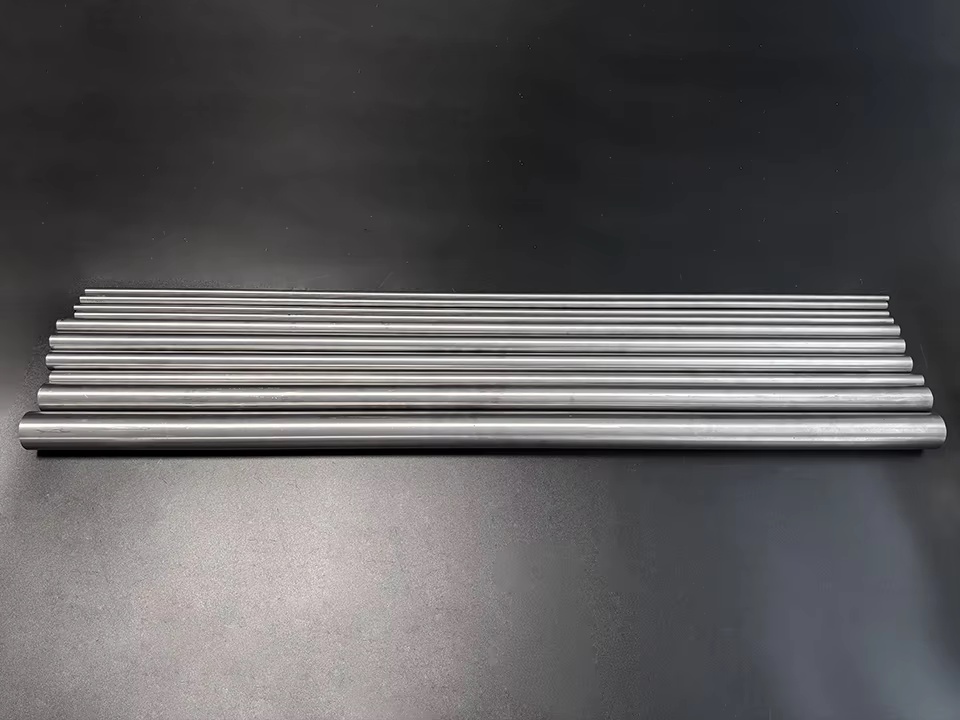
Dateline: February 27, 2026 – The global titanium and titanium alloy rods market is experiencing transformative growth, driven by breakthrough manufacturing technologies and expanding applications across diverse industries. Valued at approximately US$ 4.49 billion in 2025, the market is projected to reach US$ 6.63 billion by 2032, growing at a compound annual growth rate (CAGR) of 5.8%. This expansion reflects titanium rods' evolution from traditional industrial components to enabling technologies for critical applications in medical implants, chemical processing, marine engineering, and energy systems.
Manufacturing Breakthroughs: Pushing the Limits of Scale and Precision
Record-Breaking 13-Ton Titanium Alloy Ingots
A landmark achievement in titanium rod manufacturing occurred in February 2026, when China's Shaanxi Tacheng Aviation Material Company and China First Heavy Industries jointly delivered the nation's first 13-ton grade titanium alloy rod billet. This breakthrough fills a critical technical gap in large-tonnage titanium alloy rod manufacturing and provides essential material support for heavy equipment production in marine engineering and other demanding sectors.
The achievement required overcoming significant technical challenges. The team optimized vacuum arc remelting process parameters based on solute segregation effects and melt convection behavior, producing 20-ton grade Φ1240mm ingots with high purity and uniform organization. They also achieved precise matching of temperature fields and equivalent strain fields to solve deformation coordination challenges in rod billet forging, completing the entire process from design to production in just 87 days.
Microstructure Innovation Enhances Performance
Western Superconducting Technologies recently obtained a patent for "a uniformly oriented fine-grained polycrystalline titanium alloy rod and preparation method thereof" . This innovation reduces deformation passes in both β single-phase region and (α+β) two-phase region, achieving effective grain refinement through cross-phase zone forging. The technique significantly reduces texture strength while refining the microstructure, greatly enhancing the isotropy of titanium rods to meet demanding application requirements.
Precision Manufacturing Capabilities Expand
Advanced rolling and finish machining technologies are enabling tighter tolerances and improved yields in titanium alloy rod production. Manufacturers are investing in process fidelity improvements to ensure consistent mechanical properties, particularly for high-value applications in medical and industrial sectors. Digital traceability systems are accelerating material certification and reducing time-to-production for regulated applications.
Application Expansion: Diversifying Across Critical Industries
Medical Sector Drives High-Value Demand
The medical industry represents a rapidly growing market for titanium medical rods, driven by titanium's exceptional biocompatibility, corrosion resistance, and mechanical properties. High-end titanium alloys, particularly grades like Ti-6Al-4V ELI, are the materials of choice for orthopedic implants including hip and knee replacements, spinal fixation systems, and trauma fixation devices.
Titanium's modulus of elasticity more closely matches that of natural bone compared to stainless steel, reducing stress shielding and promoting better long-term outcomes. Its osseointegration capability—the ability to bond directly with living bone—makes it ideal for cementless implants achieving biological fixation . The global orthopedic implants market, valued at approximately $45 billion, continues to drive steady demand for precision titanium alloy rods in medical applications.
Energy and Industrial Applications
In chemical processing, titanium industrial rods serve critical functions in heat exchangers, pumps, and valves where corrosion resistance and thermal performance are paramount. Titanium's resistance to chlorides, sulfides, and acid gases makes it indispensable for equipment handling aggressive media in chlorine production, pharmaceutical manufacturing, and pulp bleaching operations.
Marine engineering increasingly specifies titanium rods for seawater piping systems, desalination plants, and offshore platform components. The material's resistance to chloride stress corrosion cracking ensures reliable operation in high-temperature brine environments, while its erosion resistance handles high-velocity seawater flows.
Emerging Opportunities in Clean Energy
The global transition to clean energy creates substantial opportunities for titanium rods in hydrogen production and geothermal systems. Titanium's corrosion resistance proves essential in electrolyzers producing green hydrogen, where acidic electrolytes and oxidizing conditions rapidly degrade conventional materials. In geothermal power generation, titanium components withstand aggressive brines containing dissolved solids and gases at elevated temperatures.
Market Dynamics and Supply Chain Evolution
Global Market Concentration
The titanium rod market is characterized by a concentrated competitive landscape, with major producers including Baoji Titanium Industry, Western Superconducting Technologies, Hunan Xiangtou Jin Tian Titanium Technology, Timet, VSMPO-AVISMA Corporation, ATI, Carpenter Technology Corporation, Daido Steel, and Kobe Steel. The top three manufacturers account for approximately 42% of global market share.
Titanium alloy rods represent the largest product segment, capturing approximately 84% of the market, reflecting their versatility and superior performance characteristics compared to commercially pure titanium rods.
Regional Dynamics
The United States currently holds the largest regional market share at approximately 36%, driven by strong demand from industrial and medical sectors. The Asia-Pacific region, particularly China, is experiencing rapid growth in both production capacity and consumption, with significant investments in advanced manufacturing technologies.
Recent tariff measures and trade policy shifts have prompted manufacturers to reassess sourcing strategies and accelerate interest in domestic processing capacity. Procurement teams are diversifying supplier relationships and adopting near-shoring strategies to reduce exposure to long lead times and single-source dependencies.
Supply Chain Resilience
Supply chain resilience has emerged as a strategic priority for titanium rod buyers. Digitization of quality records and traceability systems enables faster material certification and reduces time-to-production for regulated applications . Manufacturers are investing in vertical integration and partnerships with regional mills to secure qualified supply streams that reduce reliance on imports.
Sustainability and Circular Economy
Environmental considerations increasingly influence titanium rod development and specification. Titanium is 100% recyclable without degradation of properties, and recycled titanium requires approximately 95% less energy than primary production from ore. Manufacturers are developing closed-loop systems that capture manufacturing scrap and recycle it back into production.
While titanium rods carry higher initial costs than competing materials, lifecycle cost analysis increasingly favors titanium in applications where maintenance, replacement, or downtime costs are significant. In chemical processing, marine, and infrastructure applications, titanium's extended service life often results in lower total cost of ownership despite higher acquisition costs.
Challenges and Future Outlook
Persistent Industry Challenges
Despite promising growth trajectories, the titanium alloy rod industry faces significant challenges. High production costs remain a primary barrier to broader adoption, with titanium typically priced higher than stainless steel alternatives . The complex extraction and processing of titanium ore, coupled with energy-intensive manufacturing, result in elevated costs that limit penetration in price-sensitive applications.
Raw material price volatility, influenced by geopolitical factors and supply chain disruptions, complicates long-term planning. The industry also faces a critical shortage of technicians trained in titanium metallurgy and precision rod manufacturing.
Opportunities for Growth
Additive manufacturing opens exciting frontiers for customized titanium rod solutions, enabling complex geometries unachievable through conventional methods . The medical sector shows strong interest in additively manufactured titanium components for patient-specific implants.
Emerging market expansion, particularly in Asia-Pacific nations investing heavily in healthcare infrastructure, industrial capacity, and clean energy systems, presents substantial growth potential. Development of novel titanium alloys optimized for specific applications—improved formability, enhanced corrosion resistance, tailored mechanical properties—can open new industrial uses.
Sustainability initiatives drive innovation in more eco-friendly titanium production methods, with processes like electrochemical reduction showing promise for reducing energy consumption . Companies investing in green manufacturing technologies stand to gain competitive advantage as sustainability becomes a key purchasing criterion across industries.
Conclusion
The titanium rods industry stands at an inflection point, transitioning from traditional industrial components to enabling technologies for next-generation medical, energy, and industrial applications. Breakthrough innovations in large-scale ingot manufacturing, microstructure control, and precision processing are expanding the boundaries of what's possible with titanium rods, enabling designs and applications previously unattainable.
As the global market approaches the US$ 6.6 billion milestone, the convergence of manufacturing innovation, application expansion, and sustainability imperatives positions titanium rods for sustained growth. The industry's ability to address challenges in cost, supply chain resilience, and skilled workforce development will determine how fully it realizes its potential as a cornerstone material for 21st-century manufacturing and infrastructure across medical, industrial, and energy sectors.
Navigation
 How can the service life of titanium plates be extended under harsh working conditions17/04/2026
 Chaoyang accelerates its ¥1.2B small-particle sponge titanium investment, with 50kt capacity boosting aerospace.16/04/2026
 Deeply engaged in the manufacturing of titanium equipment, we safeguard the development of the industry with advanced equipment and practical cooperation15/04/2026
 A New Chapter in Titanium Alloy Applications: Titanium Combs from Aerospace to Hair Care13/04/2026


Send Us A Message