






Beyond Straight Lines: Breakthroughs in Titanium Tube Technology Reshape Global Industries
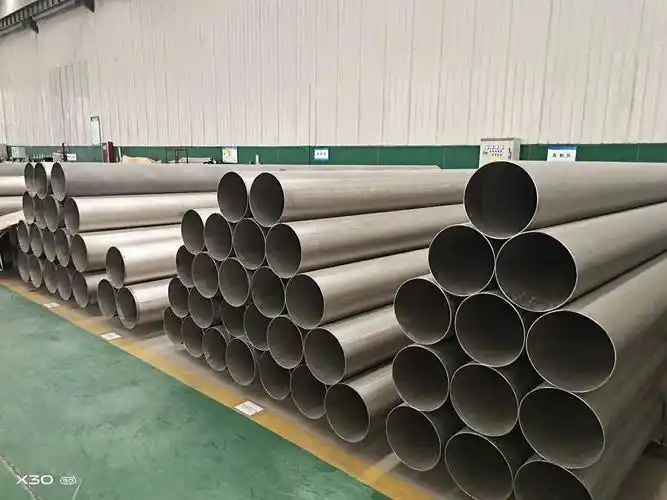
Dateline: February 25, 2026 – The global titanium tubing industry is undergoing a profound transformation, driven by breakthrough product innovations, advanced manufacturing techniques, and rapidly expanding applications across energy, aerospace, medical, and industrial sectors. Valued at approximately US$ 776 million in 2024, the global titanium tubing market is projected to reach US$ 982.2 million by 2032, growing at a compound annual growth rate (CAGR) of 4.5%. This growth reflects titanium tubing's evolution from a specialized niche product to an enabling technology for next-generation engineering solutions.
Product Innovation: Flexible Titanium Corrugated Tubes Revolutionize Installation
Perhaps the most significant recent advancement in titanium tubing comes from South Korea's ATX Co., Ltd., which has successfully commercialized the world's only flexible titanium corrugated tube designed for real industrial applications. This breakthrough addresses fundamental limitations of conventional straight titanium pipes, particularly in transportation, installation, and on-site construction.
Traditional titanium piping is typically supplied in segmented lengths of approximately 2–5 meters due to transportation constraints, requiring multiple welded joints during installation. Titanium welding demands controlled shielding environments to prevent oxidation and highly skilled labor, resulting in increased construction difficulty, potential delays, and higher costs.
ATX's innovative solution incorporates a corrugated structure that enables manual bending along complex routes without additional processing. Key features include weld-free installation through hand-tool cutting and socket-type connections, and continuous supply in coiled form up to approximately 100 meters. The corrugated design achieves mechanical stability with a wall thickness of just 0.3T—approximately 40% thinner than the 0.5T thickness commonly used in industrial straight titanium pipes—resulting in faster and more efficient heat transfer.
This breakthrough transforms titanium corrugated tubes from a theoretical concept into a practical, installable solution for corrosive environments, including seawater aquaculture, chemical processing, water treatment, and waste heat recovery applications.
Manufacturing Breakthroughs: Advanced Processes Enable High-Performance Tubing
Composite Forming Technology for Thin-Walled Tubes
Researchers at Chengdu Advanced Metal Materials Industry Technology Research Institute have developed an innovative patent-pending method for producing high-performance titanium alloy thin-walled tubes. The technique creatively combines reciprocating extrusion with superplastic bulging processes, overcoming traditional limitations in tube performance and precision. This titanium alloy thin-walled tube manufacturing breakthrough promises to deliver superior tubular components for high-end manufacturing sectors, particularly aerospace and precision engineering.
Titanium Alloy Continuous Tubing for Energy Applications
In April 2025, China National Petroleum Corporation's Baoshi Pipe Industry successfully manufactured the first titanium alloy continuous tubing, achieving key technological breakthroughs in cold bending forming rebound control, high-precision continuous laser welding, and online gas-shielded annealing. With a density only 57% that of steel, this titanium alloy continuous tubing significantly increases pipe string deployment depth and adapts to harsh onshore and offshore oil and gas conditions with high sulfur, CO₂, and chloride content.
Large-Diameter and Ultra-Thin Wall Advancements
The industry has witnessed remarkable achievements in dimensional capabilities. China Shipbuilding Industry Corporation's 725th Research Institute developed a φ690mm×20mm titanium alloy seamless 2.5D bent pipe, setting a new domestic record for large diameters. Xinpengyuan Group achieved mass production of titanium pipes with 670mm diameter and 20mm wall thickness using oblique rolling large-diameter expansion technology, with yield rates exceeding 98%.
Ultra-thin wall technology has reached new milestones, with titanium pipes achieving outer diameters of 100-300mm while maintaining wall thickness/outer diameter ratios ≤0.001, surface roughness Ra<0.2μm, and straightness <0.5mm/m.
Application Expansion: Diversifying Across Critical Industries
Aerospace and Defense Leadership
The aerospace industry remains the dominant driver for titanium tubing demand, accounting for over 35% of global consumption. Titanium's exceptional strength-to-weight ratio and corrosion resistance make it indispensable for aircraft hydraulic systems, fuel lines, and structural components. Major aircraft manufacturers increasingly adopt titanium tubing solutions to meet stringent safety requirements while reducing overall weight. Next-generation aircraft like the Boeing 787 Dreamliner and Airbus A350 contain 14-15% titanium by weight, creating sustained market momentum.
TA16 and TA18 titanium alloy tubing have achieved mass production for hydraulic pipelines in domestically produced helicopters and drones, promoting lightweight design and increased payload capacity. These alloys possess excellent cold and hot working properties, demonstrating the versatility of aerospace titanium tubing applications.
Energy Sector Transformation
The energy sector represents a rapidly growing application frontier for titanium tubing. In renewable energy, titanium coil tubing is making significant impacts in concentrated solar power (CSP) plants, where these tubes are used in heat transfer systems. The high corrosion resistance of titanium proves essential for withstanding harsh heat transfer fluids, ensuring long-term reliability and reduced maintenance.
In offshore oil and gas platforms, titanium tubing serves critical fluid transfer lines, handling high-pressure conditions deep underwater without leakage. The material's resistance to corrosion from saltwater and chemicals makes it ideal for these demanding environments. The global transition toward cleaner energy solutions has also increased demand in nuclear power plants, where titanium maintains structural integrity under extreme temperatures.
Medical and Biotechnology Innovations
The medical device industry continues to discover new applications for titanium tubing. In minimally invasive surgeries, titanium medical tubing enables the creation of catheters that can be bent and shaped to navigate complex blood vessels and body cavities. Titanium's biocompatibility ensures the human body does not reject the tubing, reducing infection risks and complications.
Recent research published in Applied Surface Science demonstrates breakthrough developments in nanotube-structured coatings on titanium surfaces for medical implants. Scientists successfully fabricated one-piece bifurcated piezoelectric nanotubes on titanium, achieving significantly higher antibacterial rates after 14 days compared to day one—overcoming the traditional challenge of explosive early-stage drug release. This innovation provides robust experimental support for designing titanium nanotube coatings on medical surfaces, enabling sustained antibacterial functions and enhanced osteoblast compatibility. In bioreactors, titanium coil tubing maintains optimal temperature control while ensuring corrosion-resistant properties prevent contamination of biological samples.The global orthopedic implants market, valued at $45 billion in 2024, relies heavily on titanium components, with demand for precision titanium tubing in specialized medical instruments growing at a steady 6.8% annual rate.
Chemical Processing and Industrial Applications
The chemical processing industry increasingly specifies titanium seamless tubes for heat exchange applications, where precise temperature control and corrosion resistance are essential. In pharmaceutical manufacturing, titanium tubing supports distillation and purification processes, with the material's cleanability crucial for maintaining drug quality.
For petrochemical applications, titanium tubing addresses the fundamental challenges of corrosion failure, short service life, and high maintenance costs associated with traditional materials. In environments with high hydrogen sulfide, carbon dioxide, and chloride content, titanium has become an irreplaceable strategic material. TA10 (Ti-0.3Mo-0.8Ni) titanium alloy tubes, in particular, offer excellent crevice corrosion resistance and superior performance in reducing environments compared to commercially pure grades.
Market Dynamics and Regional Developments
China's Expanding Capabilities
China's titanium tubing industry has demonstrated remarkable progress in both production capacity and technological sophistication. Baoti Group, Western Metal Materials Co., and other Chinese manufacturers continue expanding their market presence across industrial, marine engineering, and aerospace applications. The country's titanium seamless pipe sector, once considered a niche segment within the broader titanium materials landscape, is experiencing clear structural growth driven by high-end manufacturing, energy systems, and defense industry upgrades. Baogang Special Steel Pipe achieved mass production of TC4 titanium alloy seamless pipes suitable for the highly corrosive environment of deep-sea oil exploration. The first domestically produced large-diameter, thin-walled titanium alloy seamless pipe manufactured through hot continuous rolling also emerged, demonstrating China's growing capabilities in titanium seamless pipe manufacturing.
Global Market Competition
The global titanium tubing market features a semi-consolidated competitive landscape with key players including Sandvik (Kanthal), Fine Tubes, Superior Tube (both under AMETEK), Webco, Vascotube, U.S. Titanium Industry, and BRISMET . These companies compete through innovation, quality certifications, and strategic partnerships with aerospace and energy industry leaders.
Sandvik maintains a strong position through its extensive product portfolio of high-precision titanium tubes for demanding environments, with global footprint spanning North America, Europe, and Asia-Pacific . Fine Tubes and Superior Tube have invested heavily in seamless tubing production essential for high-pressure subsea operations, capturing substantial market shares through innovative manufacturing techniques.
Challenges and Future Outlook
Persistent Industry Challenges
Despite promising growth trajectories, the titanium tubing industry faces significant challenges. High production costs remain a primary barrier to broader adoption, with titanium tubing typically priced 3-5 times higher than stainless steel alternatives . The complex extraction and processing of titanium ore, coupled with energy-intensive manufacturing, result in elevated costs that limit penetration in price-sensitive applications.
Supply chain vulnerabilities persist, with over 60% of global titanium sponge production originating from just three countries, making the market susceptible to trade restrictions and logistical disruptions . Technical processing challenges, including titanium's work-hardening characteristics and tendency to gall during processing, require specialized expertise and equipment, limiting the number of qualified manufacturers .
The industry also faces a critical shortage of technicians trained in titanium metallurgy and precision tube manufacturing, with an estimated 25% of the current skilled workforce approaching retirement . This talent gap could delay project timelines and limit the industry's ability to capitalize on growing demand.
Opportunities for Growth
Additive manufacturing opens exciting frontiers for customized titanium tubing solutions, enabling complex geometries unachievable through conventional methods . The aerospace sector shows strong interest in additively manufactured titanium components, with projected adoption growing at 22% annually through 2032 .
Sustainability initiatives are driving innovation in more eco-friendly titanium production methods. Processes like electrochemical reduction and continuous casting show promise for reducing energy consumption by up to 40% . Companies investing in green manufacturing technologies stand to gain competitive advantage as sustainability becomes a key purchasing criterion across industries.
Emerging market expansion, particularly in Asia-Pacific nations like India and Vietnam investing heavily in aerospace, energy, and healthcare infrastructure, presents substantial growth potential for titanium tubing applications.
Conclusion
The titanium tubing industry stands at an inflection point, transitioning from a specialized material solution to an enabling technology for next-generation engineering across aerospace, energy, medical, and industrial sectors. Breakthrough innovations in flexible corrugated designs, advanced manufacturing processes, and surface engineering are expanding the boundaries of what's possible with titanium tubing.
As the global market approaches the US$ 1 billion milestone, the convergence of product innovation, application expansion, and sustainability imperatives positions titanium tubing for sustained growth. The industry's ability to address challenges in cost, supply chain resilience, and skilled workforce development will determine how fully it realizes its potential as a cornerstone material for 21st-century infrastructure and technology.
Navigation
 How can the service life of titanium plates be extended under harsh working conditions17/04/2026
 Chaoyang accelerates its ¥1.2B small-particle sponge titanium investment, with 50kt capacity boosting aerospace.16/04/2026
 Deeply engaged in the manufacturing of titanium equipment, we safeguard the development of the industry with advanced equipment and practical cooperation15/04/2026
 A New Chapter in Titanium Alloy Applications: Titanium Combs from Aerospace to Hair Care13/04/2026

Send Us A Message