






Titanium’s Double Life: The Metal That’s in Your Toothpaste and Your Fighter Jet
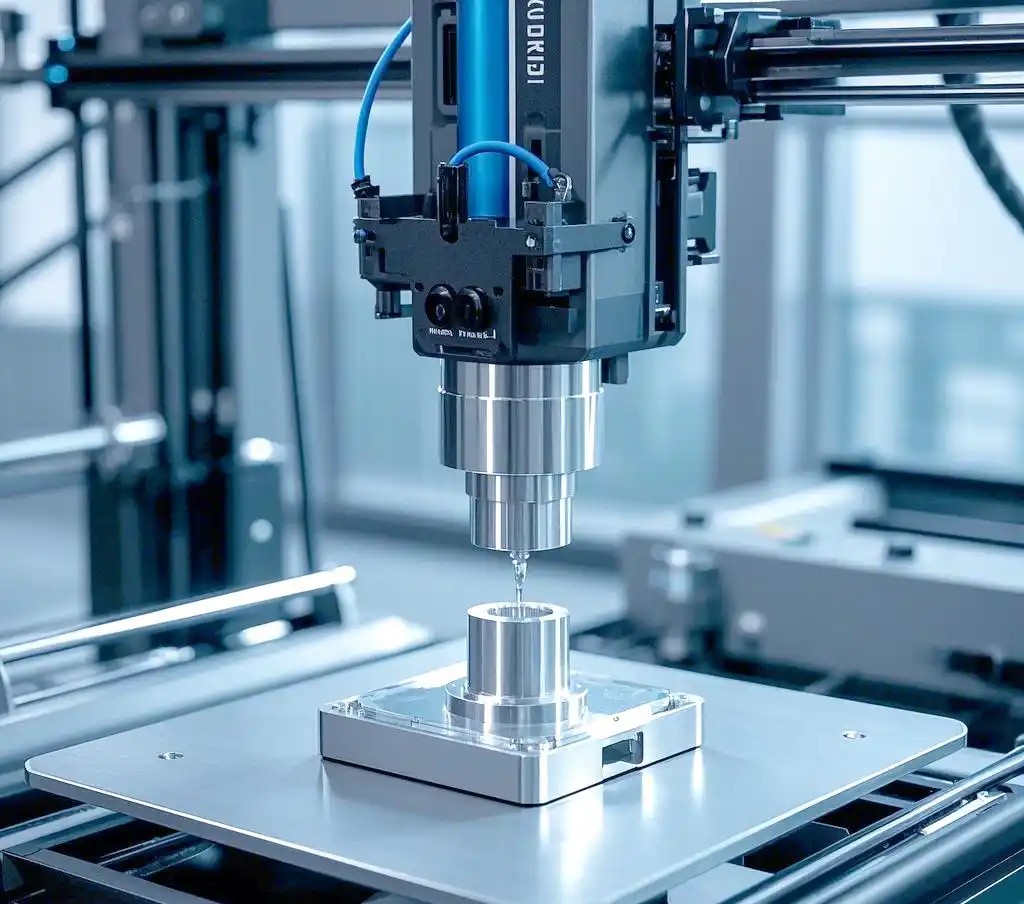
Ask someone what titanium is used for, and you'll probably get a list that sounds like a catalog of cool stuff. Fighter jets. Racing bikes. Hip replacements. Fancy watches. Maybe a golf club or two.
And that list isn't wrong. But here's what almost nobody realizes: those high-tech, high-performance applications represent less than 5% of all the titanium consumed on the planet.
The other 95%? It's in your bathroom. Your kitchen. The walls of your house. The sunscreen you slather on before a beach day.
Titanium lives two completely different lives. In one life, it's a gleaming silver metal that engineers treat like gold—light, strong, and impossibly tough. In the other, it's a fine white powder that quietly makes the world brighter, whiter, and more opaque. To understand what titanium is mostly used for, you have to follow both threads.
The Split You Didn't See Coming
Here's the simplest way to think about it:
Titanium dioxide (TiO₂) — a white pigment — accounts for roughly 95% of global titanium consumption. It goes into paint, plastic, paper, sunscreen, and even food.
Titanium metal — the strong, lightweight stuff — accounts for the remaining 5%. That's the titanium you've heard about in jets, implants, and high-end gear.
So if you measure by volume, the answer to “what is titanium mostly used for” is straightforward: it's mostly a white pigment that makes things bright and opaque. But if you measure by strategic importance or engineering value, the metal version—especially the legendary Ti-6Al-4V alloy—steals the show.
Let's walk through both.
Part One: The Titanium You Didn't Know You Were Using
Titanium dioxide is everywhere, and you've probably never thought about it. Its job is simple: make things white. But it does that job better than anything else on the market.
The Paint on Your Walls
If you've ever painted a room and marveled that one coat actually covered the old color, thank titanium dioxide. It's the single most important ingredient in white paint—and in most colored paints too. Without it, paint would be translucent, meaning you'd need layer after layer to get decent coverage.
It also protects paint from the sun. Titanium dioxide absorbs ultraviolet light, which means your house's exterior paint doesn't chalk and fade nearly as fast as it would otherwise. That's why the paints and coatings industry consumes roughly half of all titanium dioxide produced.
Your Toothpaste and Sunscreen
Open your bathroom cabinet. That tube of white toothpaste? Titanium dioxide is what makes it bright white instead of a dull grayish paste.
The sunscreen in your beach bag? Physical sunscreens rely on titanium dioxide to sit on your skin and reflect UV rays away, rather than absorbing them like chemical sunscreens do. It's non-toxic, doesn't penetrate the skin, and provides excellent broad-spectrum protection.
The White Plastic Bucket and the Magazine in Your Hand
That white plastic outdoor chair that's been sitting in the sun for years without turning yellow? Titanium dioxide again. In plastics, it provides whiteness, opacity, and UV protection—which means plastic parts last longer outdoors.
Flip through a glossy magazine. The bright white paper stock gets that brightness from titanium dioxide. Premium packaging, photo paper, and high-end catalogs all rely on it to make colors pop and text crisp.
Self-Cleaning Glass and Air Purifiers
Here's where it gets futuristic. When titanium dioxide is exposed to UV light, it triggers a chemical reaction that breaks down organic dirt. This is why some modern buildings have “self-cleaning” glass—rain washes away the dirt that the TiO₂ coating has broken down.
The same principle is used in some air purifiers and water treatment systems. A coating of titanium dioxide can help break down pollutants, keeping the air or water cleaner.
Part Two: The Titanium That Engineers Obsess Over
Now let's talk about the titanium that makes headlines. The metal version accounts for only about 5% of all titanium consumption, but it's responsible for some of the most demanding applications on Earth—and off it.
Aerospace: Where Titanium Earns Its Reputation
If you want to understand why engineers love titanium metal, look up. Every time you board a commercial jet, you're trusting your life to components made from titanium. The aerospace industry consumes roughly three-quarters of all titanium metal, and for good reason.
Aircraft need materials that are:
Light — every pound saved saves fuel for decades
Strong — structural components have to handle extreme loads
Heat-resistant — engine parts get hot enough to soften aluminum
Titanium checks all three boxes. It's about 45% lighter than steel but can match steel's strength. It keeps its strength at temperatures where aluminum would turn to putty. That's why you'll find it in:
Airframes: Landing gear, wing structures, fuselage frames
Engines: Fan blades, compressor discs, casings
Fasteners: Bolts and rivets that hold everything together
The F-35 fighter jet is roughly one-quarter titanium by weight. Commercial planes like the Boeing 787 and Airbus A350 use titanium extensively to enable their lightweight, fuel-efficient designs.
The Workhorse Alloy: Ti-6Al-4V
When people talk about titanium in engineering, nine times out of ten they're talking about a specific alloy: Ti-6Al-4V. That's titanium with 6% aluminum and 4% vanadium, and it accounts for over half of all titanium alloy consumption globally.
Why is this alloy so popular? Because it offers the best balance of:
Strength-to-weight ratio — better than almost any steel
Corrosion resistance — shrugs off seawater and chemicals
Fabricability — can be welded, machined, and formed (with the right techniques)
Biocompatibility — safe to put inside the human body
You’ll find Ti-6Al-4V in everything from aircraft landing gear to racing bike frames to surgical implants.
Medical Implants: When Metal Meets the Body
If there's one application where titanium is truly irreplaceable, it's inside the human body.
Here's why: most metals corrode inside the body. The body reacts to them—sometimes violently. Titanium doesn't. It's biocompatible, meaning the body doesn't reject it. In fact, bone will actually grow directly onto a titanium implant, locking it in place permanently. This process is called osseointegration.
That's why you'll find titanium in:
Hip and knee replacements (the ball-and-socket joints)
Dental implants (screws that fuse with the jawbone)
Bone plates and screws (holding fractures together)
Pacemaker cases (protecting the electronics inside)
Surgical instruments (especially for minimally invasive surgery)
A titanium hip implant can last 20 years inside a patient without failing. A dental implant can function like a natural tooth root for a lifetime. No other metal comes close to matching that combination of strength, corrosion resistance, and biological compatibility.
Chemical Plants and Desalination: Where Steel Fails
In the chemical industry, corrosion is a constant battle. Acids, chlorides, and other aggressive chemicals eat through carbon steel and even stainless steel over time.
Titanium doesn't care. Its naturally forming oxide layer makes it almost immune to corrosion in most chemical environments. That's why chemical plants use titanium for:
Heat exchangers handling corrosive fluids
Reaction vessels for producing acids
Piping systems that would leak with steel
In desalination plants—where seawater is turned into drinking water—titanium is the go-to material. Seawater is brutal on metals. Titanium tubes and heat exchangers can last decades with zero maintenance, while stainless steel equivalents might need replacement in 10–15 years.
The upfront cost of titanium is higher, but the lifecycle cost tells a different story. When you factor in no coatings, no corrosion allowance, no regular maintenance, and a service life measured in decades, titanium often ends up being the cheaper option in the long run.
Marine and Offshore: Underwater Champions
Ships, submarines, and offshore platforms have a shared enemy: saltwater. Titanium's resistance to seawater corrosion is so complete that it's used for:
Submarine pressure hulls (lightweight and non-magnetic)
Offshore platform risers and piping
Shipboard seawater systems (cooling, firefighting)
Propeller shafts and fittings
In these environments, failure isn't an option, and titanium delivers reliability that no coating can match.
The Growing Frontier: 3D Printing
One of the most exciting developments in the titanium world is additive manufacturing—what most people call 3D printing.
Titanium powder, particularly Ti-6Al-4V, is a star material in metal 3D printing. It allows manufacturers to:
Create complex geometries that can't be machined from solid stock
Reduce waste dramatically (critical for an expensive material like titanium)
Produce custom parts on demand, especially for medical implants tailored to individual patients
A growing number of hip replacements, dental implants, and aerospace components are now being 3D printed in titanium—a trend that's likely to accelerate as the technology improves.
A Quick Summary
So, What's Titanium Mostly Used For?
If you ask the question by volume, the answer is titanium dioxide—the white pigment in your paint, your plastic, your sunscreen, and your toothpaste. That's where 95% of all titanium ends up.
If you ask by engineering impact, the answer is titanium metal—the stuff that flies in jet engines, holds bones together, survives chemical plants, and dives to the ocean floor.
One element. Two completely different roles. One quietly makes the world brighter. The other makes the impossible possible. That duality—humble and high-tech, everywhere and exclusive, cheap and expensive—is what makes titanium one of the most fascinating materials on the planet.
Navigation
 How can the service life of titanium plates be extended under harsh working conditions17/04/2026
 Chaoyang accelerates its ¥1.2B small-particle sponge titanium investment, with 50kt capacity boosting aerospace.16/04/2026
 Deeply engaged in the manufacturing of titanium equipment, we safeguard the development of the industry with advanced equipment and practical cooperation15/04/2026
 A New Chapter in Titanium Alloy Applications: Titanium Combs from Aerospace to Hair Care13/04/2026


Send Us A Message