






Titanium U-Shaped Groove Manufacturing: Problems You'll Actually Face and How to Handle Them
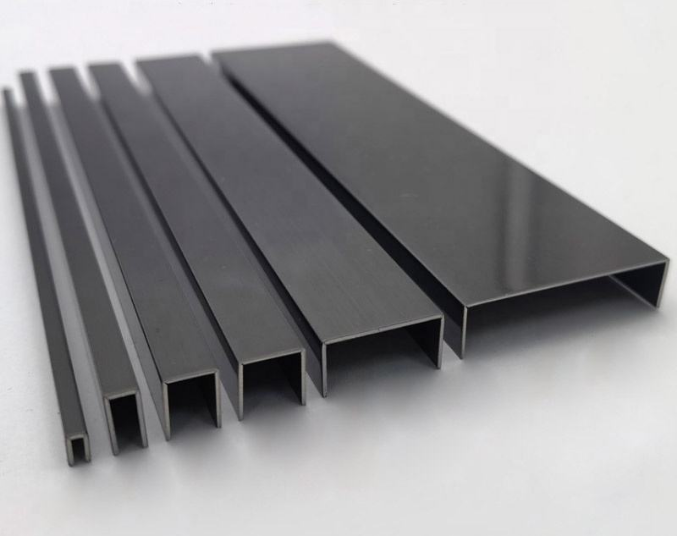
Let's Start with the Obvious: U-Shapes Are Tricky
If you've never made a U-shaped groove in titanium, here's what you need to know. It looks simple on paper. It's a channel. It's got a curved bottom and straight sides. How complicated can it be?
Pretty complicated, actually.
I've watched good machinists burn through tools trying to cut U-grooves. I've seen casting shops scrap parts because metal got where it shouldn't. I've watched welders fight contamination in grooves that looked perfectly clean. And every time, the problem traces back to the same thing: the shape itself makes everything harder.
Titanium is already difficult to work with. It's sensitive to heat, contamination, and stress. Now put that material into a geometry that traps heat, restricts access, and concentrates stress at the bottom curve. You've got a recipe for headaches.
This isn't textbook stuff. This is what happens when you actually try to make these things.
1. Hot Forming: When the Metal Won't Go Where You Want
Let's start with the most direct approach. Heat up some titanium and push it into a U-shaped die. Simple idea. Execution? Not so much.
The Flow Problem
Titanium doesn't like to move. Its crystal structure makes it less willing to flow into tight corners than steel or aluminum. When you're trying to fill the bottom radius of a U-shape, you're asking the material to do something it naturally resists.
What happens? The corners don't fill completely. You get thin spots where the material stretched too far. You get laps where it folded instead of flowed. You get cracks where it just gave up.
Hot and Cold in the Same Part
Here's another fun fact: titanium is terrible at conducting heat. When you're forming a U-shape, the thin bottom cools fast. The thicker sides stay hot. So at the exact moment you're trying to form the shape, different parts of the same cross-section have different strength and different ductility.
The bottom gets cold and brittle while the sides are still hot and soft. You try to keep forming, and the bottom cracks. You stop, and you don't get the shape you need. Lose-lose.
The Die Problem
At forming temperatures, titanium wants to stick to whatever die material you're using. This is galling, and it's brutal on U-shaped profiles because there's so much contact area. The material picks up on the die surfaces. The surfaces tear. Your die wears out fast. Your parts come out rough.
Glass lubricants help, but they're messy and you have to apply them perfectly. Miss a spot, and you'll find out when the next part comes out scrap.
2. Casting: The Core Nightmare
Sometimes you need to cast a U-shaped groove as part of a larger component. This is common in aerospace—think rings with internal channels. And this is where things get really interesting.
Cores That Don't Cooperate
To cast a U-shaped groove, you need something to form that empty space. Usually that's a ceramic core. But here's the catch: that core has to sit exactly where it belongs while molten titanium rushes around it at high speed. And later, you have to get it out.
Research on titanium castings with U-shaped grooves shows that core design is make-or-break. In one study of annular castings (ring-shaped parts) with narrow U-grooves, engineers found that defect rates dropped from over 70% to under 5% just by optimizing the core .
What made the difference? Core length. Short cores left gaps where metal could seep behind. Long cores that made full contact with the mold surface eliminated those gaps. Simple fix, massive improvement.
The Alpha Case Monster
Here's something that keeps casting people awake: alpha case. When hot titanium touches ceramic, it reacts. Oxygen from the ceramic diffuses into the metal, creating a hard, brittle layer on the surface. For U-shaped grooves, this is extra problematic because:
You can't easily machine it out of the groove bottom
The corner concentrates stress exactly where the brittle layer sits
You can't see it without cutting the part open
The same casting study found that with properly designed long cores, alpha case in U-shaped grooves was limited to the bottom and adjacent areas, with thickness under 400μm . In areas where the core contacted both sides, alpha case almost disappeared entirely.
Nothing Comes Out the Size You Designed
Cast parts shrink. U-shaped grooves shrink too. And how much they shrink depends on your core placement.
When engineers placed long cores in those U-grooves, they found something interesting. The inner surface shrinkage actually reversed—from negative to positive deviation. Wall thickness decreased slightly. Radial shrinkage increased.
The point? Core design doesn't just affect whether you get a good casting. It fundamentally changes what dimensions you'll get. If you're designing a casting with U-grooves, you need to figure out your core strategy before you cut any tooling.
3. Welding: Keeping It Clean in a Tight Space
Sometimes you're not forming or casting the groove. Sometimes you're welding pieces together to create a U-shaped section, or welding in a groove that's already there.
Groove Prep That's a Pain
U-shaped weld grooves are standard for thick titanium sections. But they're miserable to machine. That curved bottom needs special tooling. Tolerances are hard to hold. It takes forever.
Traditional U-grooves have other problems too:
Hard to get welding access into the narrow gap
Lots of filler metal needed, which means lots of heat and distortion
Long machining cycles drive up cost
A lot of shops have switched to modified geometries for thick titanium. Double-V grooves, for example, are easier to machine, use less filler metal, and still give good welding access .
Contamination Hides in Corners
Here's the thing about welding titanium: it has to be surgically clean. Any contamination from air, oil, moisture—anything—will ruin the weld. For U-shaped grooves, this is a nightmare because:
The shape traps air and contaminants
Shielding gas might not reach the bottom corners
You can't easily clean down in the groove
You can't easily see if contamination happened
Experienced titanium welders know that porosity is the least of your worries. The real danger is alpha case from atmospheric contamination—that same brittle layer that haunts castings. It forms in the heat-affected zone and cracks under load.
For thick sections with U-grooves, some shops use purge chambers—clear plastic tents filled with argon. Others use elaborate trailing shields and backup gas systems. Either way, you can't cut corners on shielding.
Heat Causes Problems
U-groove welds need a lot of heat, especially on thick material. That heat creates:
Wide heat-affected zones with changed microstructure
Distortion, especially on thinner sections
Residual stress that needs post-weld heat treatment
Grain growth that hurts mechanical properties
For thick titanium plate, experienced welders recommend multiple fill passes, careful control of temperature between passes, and consideration of higher-energy processes like plasma arc or electron beam welding if distortion is critical .
4. Machining: The Precision Battle
Most U-shaped grooves end up being machined. And machining titanium is its own special challenge.
Work Hardening Makes Everything Harder
Titanium work hardens. Cut it, and the surface gets harder. Cut it again, and your tool wears faster. For U-shaped grooves, this is extra painful because:
You usually make multiple passes
The bottom and sides get cut at different angles
Tool engagement keeps changing
The result? Inconsistent surface hardness, unpredictable tool life, and a constant fight to hold tolerance.
Small Radii, Small Tools, Big Problems
U-shaped grooves often have specified corner radii. And those radii are often small—sometimes as small as 2.5mm . Small radii mean small tools. Small tools mean low rigidity, poor heat dissipation, and high breakage risk.
For titanium, this combination is brutal. Small tools overheat fast. They deflect easily. They break constantly.
One shop making titanium grille components with multiple U-grooves and 2.5mm corner radii found that conventional machining meant constant tool changes and painfully slow feeds. Their solution? Trochoidal milling—a toolpath that keeps the tool moving in circles while advancing, maintaining constant engagement and allowing much higher speeds with lower radial cuts .
Results: tool life tripled, efficiency tripled, and the U-grooves came out clean and consistent .
Thin Walls Move
U-shaped grooves are often cut into thin-walled parts. The groove itself makes the wall even thinner. And titanium's residual stress from previous processing means that when you cut the groove, stresses release and the part moves.
For one titanium grille with 4mm final web thickness and 3mm rib height, engineers had to completely rethink their approach to control distortion . They:
Analyzed raw material stress patterns and positioned parts to balance residual stress
Added intermediate stress relief heat treatments
Optimized toolpaths to minimize stress generation during cutting
Their target was 0.3mm flatness. Without these measures, they'd never have hit it.
Deep and Narrow Is a Nightmare
Some U-shaped grooves are deep relative to their width. Machining them means reaching down with long tools. Long tools deflect, chatter, and break.
In extreme cases—like the titanium grille with 726mm long slots requiring U-shaped features—engineers had to design custom tooling and develop entirely new machining sequences . They used progressively longer drills, special guide bushings, and carefully stepped operations to achieve what had never been done before.
The lesson? Break deep features into manageable chunks. Use the shortest tool possible for each segment. Support the tool whenever you can. And accept that you'll need multiple setups and specialized tooling.
5. Inspection: Seeing Into the Dark
Once you've made a U-shaped groove, you have to check it. And that's harder than you'd think.
Measuring What You Can't Reach
Standard inspection tools don't work well in U-shaped grooves. Calipers can't reach into tight corners. CMM probes might not fit. Optical systems may not see the bottom.
For critical parts, shops often resort to:
Cutting up first-article parts for destructive inspection
Custom gauges made specifically for the groove geometry
Silicon replicas that can be measured outside the part
Tiny borescopes for visual access
Surface Integrity at the Bottom
The bottom of a U-shaped groove is a stress concentration point. If there are machining tears, laps, or cracks, that's where failure will start. But can you see them?
Visual inspection needs angled mirrors, borescopes, or cutting the part open. Dye penetrant works but requires careful application and interpretation in tight spaces. Ultrasonic testing may not resolve features in sharp corners.
For aerospace and medical work, expect to prove that your inspection method actually works for your specific geometry—not just in theory.
Finding Alpha Case
For cast or welded U-shaped grooves, detecting alpha case is critical. But how do you find a brittle layer at the bottom of a groove?
Cutting and looking under a microscope works but destroys the part. Eddy current can detect it but needs calibration on known standards. Hardness testing might show a hard layer but can't measure thickness.
The casting study mentioned earlier used metallographic examination of sectioned samples to verify alpha case thickness . For production, they'd need a reliable non-destructive method—which is still a challenge for complex internal shapes.
6. Real Stories from the Shop Floor
The Casting That Wouldn't Come Clean
A manufacturer needed ring-shaped titanium castings with narrow U-shaped grooves on the inside diameter. First attempts without ceramic cores produced over 70% defects—metal had penetrated into the groove area and wouldn't come out .
The fix had two parts:
First, they designed dedicated ceramic cores specifically for those U-grooves. Not generic cores adapted to fit—cores engineered for that exact shape.
Second, they optimized core length. Short cores left gaps where metal could seep behind. Long cores that contacted the full depth of the groove eliminated those gaps .
Results: defect rates dropped below 5%, alpha case stayed within limits, and dimensional control actually improved—shrinkage became more predictable and consistent .
The Grille Nobody Thought Could Be Machined
A titanium grille component had multiple U-shaped grooves with 2.5mm corner radii. It also had extremely deep, narrow slots—726mm long, only 5.1mm diameter, a 142:1 length-to-diameter ratio .
The challenges were brutal:
Small tools breaking constantly
Parts distorting from stress relief during machining
Trouble holding tolerance on the U-shaped features
No references for how to machine such features
The team tackled each problem systematically:
For the small corner radii, they used trochoidal milling—constant tool engagement, higher speeds, better heat management, dramatically longer tool life .
For the deep slots, they developed a multi-step drilling and reaming process with progressively longer tools, custom guide bushings, and specialized carbide .
For distortion control, they analyzed raw material stress, positioned parts to balance residual stress, added intermediate heat treatments, and optimized toolpaths .
Final result? 100% first-pass acceptance on the deep holes, 0.3mm flatness on the thin walls, and 3x efficiency improvement on the U-groove machining .
The Weld Groove That Didn't Need to Be a U
A fabricator needed to weld 28mm thick titanium plate. Original specs called for U-shaped weld grooves—standard for thick sections.
But U-grooves had multiple problems:
Hard and slow to machine
Needed special tooling
Narrow gap made welding access difficult
Lots of filler metal meant lots of heat and distortion
Their solution? Redesign the groove. Instead of U-grooves, they used a modified double-V geometry: lower section angle 55-70°, thickness 3-6mm; upper section angle 30-35°, thickness 7.5-10.5mm; root gap 3±1mm .
This new geometry:
Used significantly less filler metal
Improved welding access
Maintained weld quality with fewer passes
Reduced distortion and residual stress
Was much easier to machine
The lesson? Sometimes the smartest way to solve U-groove problems is to avoid U-grooves entirely.
7. What Experience Teaches
If you're making titanium U-shaped grooves, here's what matters.
For forming: Watch temperature gradients like your job depends on it. The bottom cools faster than the sides. Compensate with die design, heating strategy, or post-form processing.
For casting: Ceramic core design is everything. Core length, placement, and contact area determine whether you get a good part or scrap. And alpha case will find you if you're not careful .
For welding: Contamination protection is non-negotiable. U-grooves trap air and block shielding gas. Use chambers if you need to, and check weld color on every pass .
For machining: Small corner radii need smart toolpaths. Trochoidal milling changes the game. Thin walls will move—plan for stress relief and expect to iterate .
For inspection: If you can't measure it, you didn't make it. Develop inspection methods that actually work for your specific groove geometry—not just standard approaches that sort-of work.
The Bottom Line
Titanium U-shaped grooves aren't impossible. They're just unforgiving. The problems—forming cracks, casting defects, welding contamination, machining distortion—are all understood. They have causes, and they have solutions.
The shops that succeed aren't the ones that never see problems. They're the ones that know what problems to expect, have plans for dealing with them, and learn something from every batch.
Titanium doesn't give you breaks. But if you respect what it demands, U-shaped grooves are absolutely doable—even the really tough ones.
Navigation
 How can the service life of titanium plates be extended under harsh working conditions17/04/2026
 Chaoyang accelerates its ¥1.2B small-particle sponge titanium investment, with 50kt capacity boosting aerospace.16/04/2026
 Deeply engaged in the manufacturing of titanium equipment, we safeguard the development of the industry with advanced equipment and practical cooperation15/04/2026
 A New Chapter in Titanium Alloy Applications: Titanium Combs from Aerospace to Hair Care13/04/2026

Send Us A Message