






Titanium Bar Production: What Actually Goes Wrong and How We Fix It
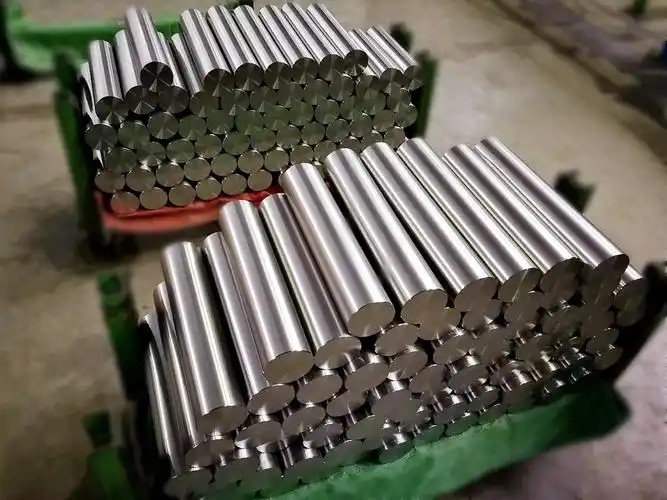
Let's Be Real About Titanium Bars
Here's the thing about titanium bars. They look simple. Just a round piece of metal, right? How hard can it be to make one?
Harder than most people think.
I've watched enough titanium production to know that this material doesn't give you a break. It's not like steel where you have some margin for error. Titanium will punish the smallest mistake. Temperature slightly off? You'll see it in the cracks. Deformation a little uneven? Wait for the ultrasonic results. Someone gets careless with lubrication? Enjoy those surface defects.
The problems in titanium bar production aren't new or mysterious. They're the same issues that have plagued producers for decades. But knowing about them and knowing how to actually deal with them are two different things.
This isn't textbook theory. This is what happens on real shop floors, to real production teams, when things go wrong.
1. It Starts With the Ingot: Problems That Are Already There Before You Begin
Here's a rule I've learned the hard way: bad ingot, bad bar. Every time. You cannot fix melting problems with forging. You cannot machine away internal defects. You cannot inspect quality into material that started wrong.
1.1 When Something Foreign Gets In
Let me tell you about a case that still makes quality managers cringe.
A batch of TC11 bars—Φ120 mm, nothing special—passed all the initial checks. Then ultrasonic testing picked up something weird. Further digging revealed a long, thin molybdenum inclusion buried inside the material .
How does molybdenum end up in a titanium bar? Follow the trail. The ingot had touched a steel plate during furnace charging. That contact transferred foreign material to the ingot end. During welding later on, that steel got incorporated into the ingot itself.
The defect that resulted was nasty:
It bonded metallurgically to the surrounding titanium (not just sitting there)
Element diffusion happened at the interface (it became part of the structure)
Completely invisible from the surface
Created a stress point that could cause failure in service
Inclusions like this are rare. But when they happen, they're game over for that material. The fix isn't inspection—it's keeping the melt shop clean and watching everything that touches the ingot.
1.2 Segregation: The Stealth Problem
If inclusions are rare, segregation is everywhere. And it shows up in more ways than you'd expect.
Beta-rich segregation happens when beta stabilizers—vanadium, iron, chromium—pile up in certain spots. In Ti662 bars, people found bright areas during low-mag inspection that turned out to be zones with extra vanadium, iron, and copper . Under the microscope, these spots showed no primary alpha phase at all. And weirdly enough, despite having more alloying elements, these areas were actually softer than the surrounding metal. Soft spots in material that's supposed to be uniform.
Alpha enrichment goes the opposite way. Aluminum concentrates, creating regions rich in alpha stabilizers. Different chemistry, same problem: non-uniform material.
Interstitial segregation is the really nasty one. Oxygen, nitrogen, carbon—these can concentrate locally and create brittle zones. In TC11 bars that cracked during annealing, investigation showed oxygen and carbon had segregated during melting . The cracks started right in those segregated spots.
Soft segregation shows up as light areas on X-ray. In TC4 bars, researchers found regions that looked brighter on X-ray—not because they were denser, but because they were softer. These areas were rich in titanium but poor in aluminum and vanadium. During hot working, they formed coarse single-phase alpha structures that were significantly softer than everything around them .
1.3 When Bigger Isn't Better
Aerospace keeps asking for bigger components, which means bigger bars. But jumping from Φ220 mm to Φ400 mm isn't just scaling up—it's a whole different challenge .
The old approach—repeated upsetting and drawing below the beta transus—works fine for smaller bars. But with large diameters, the deformation doesn't penetrate evenly. You get small deformation zones, dead spots where nothing refines properly, and the result is inconsistent properties and ultrasonic inspections that raise more questions than they answer.
For years, the practical limit was Φ220 mm bars in lengths around 1.5 meters. That's not enough for modern aerospace. Producers have had to develop completely new forging sequences—multiple heating cycles, carefully controlled temperatures, precisely managed deformation ratios—to get uniform properties in larger sections.
2. Surface Problems: When Things Go Wrong During Forming
Even with a perfect ingot, you can still end up with scrap. The forming process brings its own headaches.
2.1 Cracks: The Problem Everyone Sees
Cracks are the defect nobody wants and everybody notices. They come in different flavors.
Transverse cracks run across the bar. Common causes: forging too hot, the billet picking up moisture, or the starting material not being dense enough near the surface . The crack usually starts at some surface imperfection and works its way in.
Longitudinal cracks run along the length. These often happen when forging temperature is too low, the billet cools too much between passes, you push too hard in one pass, or your die shape is wrong .
End splitting happens at the bar ends—the material literally splits open. This can happen if you leave too much gripping end during annealing, if the end didn't get hot enough, or if the billet had hidden defects already .
Complete breakage is the worst. The bar snaps during processing. This usually means multiple things went wrong: temperature too low, deformation too aggressive, or the billet had internal issues that finally gave way.
A recent look at why rolled titanium bars crack after passing NDT showed three main culprits :
First, wrong rolling orientation or shear bands near the surface can create delamination along grain boundaries. These delaminations don't always show up on ultrasonic testing but create paths for cracks to follow.
Second, not enough forging—too few passes or wrong deformation—leaves the grain structure coarse. Coarse grains directly reduce strength and toughness, making the material crack-prone.
Third, small mistakes add up. Wrong composition, bad forging passes, heat treatment off a little—each adds residual stress or brittleness until finally, during use, the material fails.
2.2 Hot Extrusion: A Whole Different Challenge
Hot extruding titanium bars is nothing like extruding other metals.
Heat conductivity is a killer. Titanium conducts heat at only about 6.7 W/(m·K)—roughly one-third of aluminum and one-fifth of steel . During extrusion, this creates a huge temperature difference between surface and core. If the cylinder is at 400°C, the surface-to-core gradient can hit 200-250°C .
The results are predictable:
Surface metal cools fast, forming a "hard shell" with high strength but low plasticity
Core metal stays hot and plastic
Inner and outer layers deform at different rates, creating tensile stress
Outcome: surface cracks
Without optimization, surface crack rates on titanium bars can hit 35%—compared to under 5% for aluminum .
Phase changes add another layer. Extrude above the beta transus, and the metal flows beautifully but develops orange-peel surface defects. Extrude in the α+β region, and the metal flows in layers, with surface-center velocity differences of 20-30% leading to excessive bending .
Reactions with tooling at 980-1030°C cause titanium to react with iron-based or nickel-based die materials, forming low-melting-point compounds like TiFe and TiNi. This wears dies, picks up material, and creates surface defects. Without good lubrication, die life is 200-300 pieces. With glass lubricants, it can exceed 1500 .
3. Internal Problems: What You Can't See Hurts Most
Surface defects get caught. The scary ones are hiding inside.
3.1 Microstructure That's All Wrong
The goal of thermomechanical processing is a uniform, fine-grained microstructure. Achieving it in titanium is surprisingly hard.
Coarse grains come from not enough deformation or wrong temperatures. They reduce strength, toughness, and fatigue life. They also scatter ultrasonic waves, making internal defects harder to find .
Mixed grain sizes happen when deformation doesn't penetrate evenly. Some areas refine properly while others stay coarse. This gives you property variations across the bar.
Texture development (grains lining up in preferred directions) happens during rolling and forging. Titanium's hexagonal crystal structure means textured material has different properties in different directions. For some jobs, this anisotropy won't fly.
3.2 Voids and Laminations You Can't See
Sometimes the bar looks fine outside but has internal issues:
Porosity from incomplete consolidation during melting
Laminations from bad rolling practices
Internal cracks from thermal stress or too much deformation
These are dangerous because they might not show up until the bar is machined or in service. And once found, the whole batch is suspect.
3.3 The Ultrasonic Testing Problem
Here's something uncomfortable: passing ultrasonic testing doesn't guarantee a defect-free bar. Titanium's complex microstructure—coarse grains, phase boundaries, crystallographic texture—scatters and absorbs sound waves . This can hide internal defects, giving you "false negatives" where the test says everything's fine but problems exist.
This is why experienced producers don't just test at the end. They combine ultrasonic inspection with metallographic sampling, mechanical testing, and tight process control. Test only at the end, and you're just sorting good from bad. Control the process throughout, and you prevent defects from happening in the first place.
4. Process Problems: Getting the Details Wrong
4.1 Temperature Mistakes
Titanium does not forgive temperature errors. Too hot, and you get grain growth, surface oxidation, and alpha case (an oxygen-stabilized brittle layer). Too cold, and you get cracking from low ductility.
The phase transition temperature is critical. For TC4 alloys, extrusion is typically controlled in the middle of the α+β phase zone—around 920-950°C—to balance surface quality and flow uniformity . Even 20-30°C off can change the phase balance and flow behavior significantly.
Multi-stage heating helps manage these risks. For TC4 extrusion, one good approach uses three-stage heating: 600°C → 850°C → 930°C, with soak time calculated at 1.5 minutes per millimeter of diameter . This gradual heating minimizes thermal stress while ensuring uniform temperature through the billet.
4.2 Getting Deformation Wrong
Balancing deformation is tricky. Too little (<40%) won't break up the cast structure or refine grains enough. Too much (>80%) risks cracking and excess heat .
Speed matters too. Increasing extrusion speed from 1 mm/s to 5 mm/s can triple the flow rate difference between surface and center . Dynamic speed control—starting slow, speeding up as the billet moves through—helps compensate.
4.3 Lubrication Failing
At high temperatures, titanium wants to weld to whatever touches it. Without good lubrication, you get:
Material sticking to dies
Surface tearing
Fast die wear
Bad dimensions
Glass lubricants are the standard fix. They form a liquid film above 800°C that isolates titanium from the die surface, drops friction coefficients from 0.8 to 0.1-0.2, and controls surface oxidation .
4.4 Drawing and Wire Problems
When bars get drawn into wire, new problems appear. Wire breakage during drawing can come from:
Drawing temperature too high
Too much reduction per pass
Surface scratches creating stress points
Bad die geometry
Lubrication that doesn't work
These issues raise costs and limit where drawn titanium products make economic sense.
5. Inspection Problems: When Testing Isn't Enough
5.1 What Testing Misses
Every inspection method has blind spots. Ultrasonic struggles with coarse-grained materials. X-ray can miss tight cracks oriented the wrong way. Eddy current is mainly surface.
The industry response is to use multiple methods together and back them up with destructive testing of representative samples. For critical work like aerospace, sampling plans are tight and well-defined.
5.2 Traceability Matters
When defects show up, the first question is always: where did this come from? Without full traceability—from ingot to finished bar—you can't answer that.
Modern quality systems track each bar back to its original heat, its forging history, its heat treatment cycle. This lets you connect defect patterns to process parameters and improve continuously.
5.3 Standards vs. Reality
Meeting minimum standard requirements isn't the same as making a high-quality bar. ASTM B348 specifies acceptable ranges, but within those ranges, there's plenty of variation.
Smart users don't just check compliance—they watch trends. Is tensile strength drifting toward the lower limit? Is elongation dropping over time? These trends reveal process instability before it creates actual non-conformances.
6. Fixing the Problems: What Actually Works
6.1 Prevention Through Process Control
Best way to handle defects is to stop them from happening. That means:
Composition control: Keeping alloy elements in spec, with extra attention to interstitial elements (oxygen, nitrogen, carbon) that hit mechanical properties hard.
Forging optimization: Figuring out the right number of passes and deformation amounts for each alloy and size. Goal is uniform grain refinement through the whole section.
Heat treatment precision: Dialing in temperature and time to kill residual stress while getting the microstructure you want.
6.2 Multi-Stage Inspection
No single inspection catches everything. Effective quality systems combine:
Ultrasonic for internal defects
Surface inspection (visual, penetrant, eddy current)
Metallographic sampling from representative spots
Mechanical property testing (tensile, hardness)
Dimensional checks
Batch sampling throughout production—not just at the end—helps catch problems before they affect large quantities.
6.3 New Technology
The industry keeps developing better approaches. Current directions include:
Intelligent process control: Digital twins that predict metal flow and adjust parameters in real time. Moving from reactive quality control to proactive process optimization.
Better die materials: Gradient composite dies with cobalt-based surfaces and titanium alloy cores, combining wear resistance with light weight.
Ultrasound-assisted extrusion: High-frequency vibration reduces flow stress, potentially cutting extrusion forces by 20-30% while improving surface quality.
Improved alloy design: Better understanding of how microstructure relates to crack resistance lets you develop alloys that are naturally less defect-prone.
7. Real Cases: What Actually Happened
Case 1: TC4 Large-Diameter Bars
A manufacturer needed Φ250 mm TC4 bars with consistent properties and good ultrasonic inspection—something previously hard to achieve .
The fix was a multi-stage forging sequence:
Initial breakdown forging at 1150°C with controlled ratios
Repeated upsetting and drawing forging at temperatures 20-50°C above beta transus
Final chamfering and rounding
Result: uniform fine grains, minimal internal defects, ultrasonic levels meeting aerospace specs. Tensile properties were consistent: 920-960 MPa UTS, 830-870 MPa yield, elongation ≥12% .
Case 2: Cutting TC4 Extrusion Cracks
A producer was seeing 28% surface crack rates on extruded TC4 bars. Through systematic work, they got it under 3% .
Changes included:
Three-stage heating (600°C→850°C→930°C)
Glass lubricant on billets, boron nitride in dies
Speed linked to temperature: 1 mm/s start, increasing to 3 mm/s
Die cone angle cut from 120° to 100°
Asymmetric 6-hole die with center holes 15% larger
Final quality improved dramatically: straightness from 3 mm/m to 1 mm/m, surface roughness Ra ≤0.8 μm meeting aerospace standards.
Case 3: TC11 Segregation
When TC11 bars showed unexpected annealing cracks, investigation traced them to oxygen and carbon segregation from melting . The cracks started in these segregated zones during rolling and opened further during annealing.
The fix required changes at the melting stage—tighter control of interstitial elements and more homogeneous electrode preparation. No amount of downstream processing could fix a problem that started in the melt.
8. What This Means for Buyers
If you're buying titanium bars, here's what to keep in mind.
Certification isn't everything. Paperwork proves material meets specs, but it doesn't tell you about process consistency. Ask about process control, not just final test results.
Know what you need. Different applications tolerate different defect levels. Aerospace needs the best. Industrial applications may have more margin. Be honest about your requirements.
Trust matters. The best suppliers are the ones who've seen problems and fixed them. Experience counts. A supplier who's never had a defect either isn't being honest or hasn't been in business long.
Price and quality correlate. Cheap titanium bars exist for a reason. Figure out whether that reason matters for your application.
Wrapping Up
Titanium bar production isn't easy. The material is sensitive, the processes are complex, and the margin for error is small. Problems happen—inclusions, segregation, cracking, inspection limitations.
But here's the thing: these problems are understood. They have causes, and they have fixes. The shops that succeed aren't the ones that never see problems. They're the ones that know how to deal with them when they appear.
Good process control, thorough inspection, continuous improvement—these aren't buzzwords. They're the difference between bars that cause headaches and bars that do the job.
Titanium doesn't give you a break. But if you respect what it demands, it delivers performance that nothing else can match.
Navigation
 How can the service life of titanium plates be extended under harsh working conditions17/04/2026
 Chaoyang accelerates its ¥1.2B small-particle sponge titanium investment, with 50kt capacity boosting aerospace.16/04/2026
 Deeply engaged in the manufacturing of titanium equipment, we safeguard the development of the industry with advanced equipment and practical cooperation15/04/2026
 A New Chapter in Titanium Alloy Applications: Titanium Combs from Aerospace to Hair Care13/04/2026


Send Us A Message