






The Titanium Square Pipe Market: What's Really Happening Out There
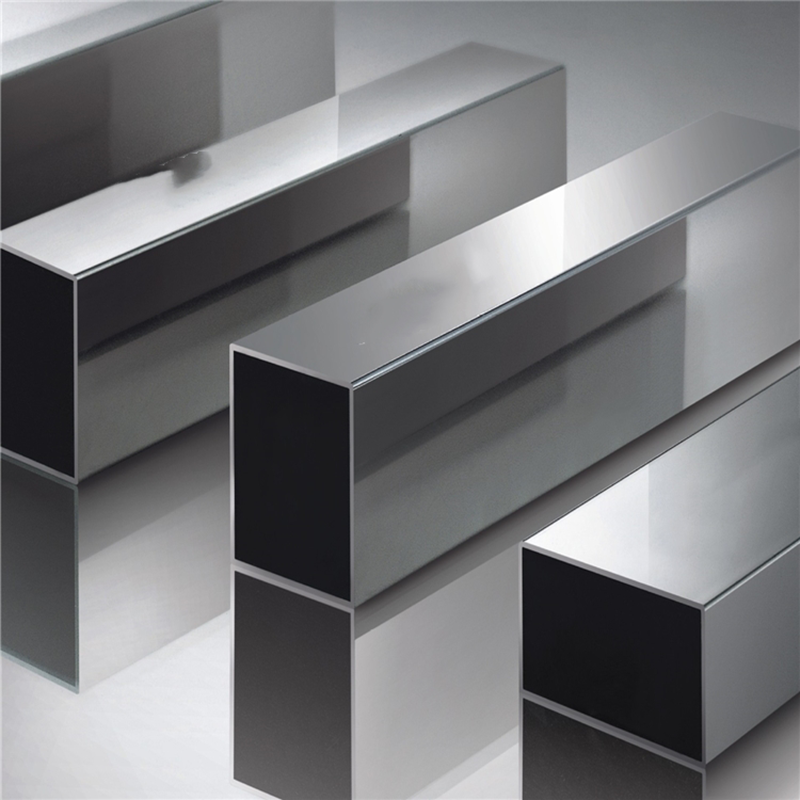
Let's Start with a Simple Observation
Here's something I've noticed after years in this business. When people think about titanium tubing, they almost always picture round pipes. And that makes sense—round tubes have been the standard forever. They're great for pressure, for fluids, for all the obvious stuff.
But walk through any serious fabrication shop these days, and you'll see more and more square tubing sitting around. Not as a novelty. Not as a special order oddity. As a legitimate product category that keeps growing year after year.
So what's going on? Why are engineers and designers suddenly interested in titanium with corners?
The answer is pretty straightforward. Round tubes are amazing at containing pressure. Square tubes are amazing at fitting into things. They stack better, they mate with flat surfaces, they look cleaner in architectural applications, and they work better as structural members when you need to attach things to flat faces.
And when you combine those geometric advantages with everything titanium already offers—light weight, corrosion resistance, biocompatibility—you get a product that's finding its way into more and more applications every year.
First, Let's Be Clear About What We're Talking About
Titanium square pipe (or rectangular tube, if the sides aren't equal) comes in two basic flavors, and the difference matters.
Seamless square tube starts as a solid billet of titanium. They heat it up, pierce it, and then form it into a square shape through drawing or rolling. No weld seam anywhere. That means uniform properties all the way around—same strength, same corrosion resistance, same everything. It's the premium option, and it's what you want for critical applications where failure isn't an option.
Welded square tube takes a different path. They start with titanium strip, roll it into a round tube, weld the seam, and then shape it into a square. The weld is there, but modern welding technology makes it nearly as strong as the parent metal. The advantage? It's more economical and you can make larger quantities.
Within those categories, you'll find variations:
Extruded tube—pushed through a die while hot. Good dimensional control, reasonable cost.
Cold-drawn tube—pulled through dies at room temperature. Tighter tolerances, smoother surfaces, better properties.
Large-diameter square tube—for structural applications and high-flow systems.
Titanium square coil—continuous lengths for specialized applications like heat exchangers.
Typical sizes range from about 10mm up to 300mm on the outer dimensions. Wall thickness can go from paper-thin 0.5mm all the way up to 25mm for heavy structural stuff. Standard lengths are usually 6 meters, but custom cuts are common.
The Grades That Actually Matter
If you're buying titanium square pipe, you're probably choosing from a handful of grades. Here's what each one brings to the table.
The Pure Titanium Family (Grades 1-4)
Grade 1 is the softest and most formable. It's not for heavy loads, but if you need to bend it into complex shapes and corrosion resistance is your main concern, Grade 1 is your friend. Chemical processing equipment, marine components that need serious forming—that's Grade 1 territory.
Grade 2 is the real workhorse. I'd guess about 70% of the CP titanium square tube we see moving through the market is Grade 2. It's got enough strength for most applications, welds beautifully, and still offers that legendary titanium corrosion resistance. Marine engineering, architectural cladding, industrial piping—Grade 2 handles it all without breaking a sweat.
Grade 3 sits in the middle. Stronger than Grade 2, less formable. It shows up when you need more muscle but still want to stay in the pure titanium family.
Grade 4 is as strong as pure titanium gets. Surgical instruments sometimes use it. Specialized industrial equipment. Not common, but when you need it, you need it.
The Alloys (Where Things Get Serious)
Grade 5 (Ti-6Al-4V) is the superstar. Six percent aluminum, four percent vanadium, and roughly three times the strength of Grade 2. This is aerospace territory. Structural components, racing parts, anything where weight savings matter and loads are high. Grade 5 square tube is premium product at a premium price, but it delivers performance that nothing else can match.
Grade 9 (Ti-3Al-2.5V) is the compromise candidate. Stronger than CP grades, more formable than Grade 5. Hydraulic tubing loves this stuff. High-end bicycles use it. It's a solid middle-ground option when you need more than pure titanium but don't require Grade 5's ultimate strength.
Grade 23 (Ti-6Al-4V ELI) is Grade 5's medical-grade cousin. "ELI" means Extra Low Interstitials—they've removed trace elements that can cause problems in the body. Medical implants, surgical instruments, anything that goes inside a person. The requirements are stringent and the documentation is extensive, but the material performs beautifully.
Then there are specialty grades like Grade 7 (with palladium added) for the most aggressive chemical environments, and various beta alloys for springs and fasteners. They serve specific niches and do it well.
Why Bother with Square? The Real Benefits
Let's talk about why someone would choose square tube over round, and why they'd pick titanium over other materials.
Weight savings is the headline act. Titanium weighs about 45% less than steel but matches its strength in many applications. For aerospace, for racing, for anything that moves, that weight difference translates directly to performance. Every kilogram saved in an aircraft frame means fuel savings for the life of the plane.
Corrosion resistance is the practical benefit. Titanium forms this incredibly stable oxide layer that shrugs off saltwater, acids, industrial chemicals—things that eat stainless steel for breakfast. Marine applications routinely get 25+ years out of titanium components with basically no maintenance.
Biocompatibility matters in medical applications. The human body doesn't recognize titanium as foreign. It doesn't trigger immune responses. It actually bonds with bone in a process called osseointegration. Square tubing shows up in external fixators, surgical frames, and specialized equipment where structural integrity meets biological compatibility.
Temperature tolerance keeps titanium relevant in hot environments. It maintains strength up to about 600°C. Aluminum is useless up there. Steel oxidizes and scales. Titanium just keeps working.
Fabrication has gotten easier. I'm not going to pretend titanium is as easy to work with as mild steel—it's not. But modern shops with proper equipment can weld it, bend it, cut it, and form it into complex shapes. The techniques are established. The knowledge is out there. You just need to follow the rules.
And honestly, it looks good. Titanium has this natural silver-gray finish that polishes up beautifully. Anodizing creates colors without dyes—the color comes from the thickness of the oxide layer. Architects love it. Consumer product designers love it. Sometimes aesthetics matter, and titanium delivers.
Who's Actually Buying Titanium Square Pipe?
The market breaks down into some distinct categories.
Aerospace and Aviation
This is still the marquee application. Aircraft frames use square tubing in wing supports, fuselage structures, landing gear components. Every pound saved matters. Every structural member needs to be absolutely reliable.
What they buy: Mostly Grade 5 seamless tube, extruded to tight tolerances, with full certification and traceability. Surface finish matters because cracks start at surface defects.
Why it's growing: New aircraft programs, fleet modernization, and the relentless push for fuel efficiency. Aerospace isn't going anywhere.
Medical Applications
Implants get most of the attention, but square tubing shows up in external fixators, surgical frames, medical equipment. When you need structural integrity and biocompatibility together, titanium is often the only choice.
What they buy: Grade 23 ELI, with strict adherence to ASTM F136. Surface finish has to be impeccable. Documentation has to be complete.
Why it's growing: Aging populations, expanding healthcare access, and the trend toward patient-specific devices. Medical demand is steady and increasing.
Marine and Offshore
Saltwater is brutal. It destroys most metals eventually. Titanium just sits there, year after year, completely unfazed. Square tubing goes into seawater cooling systems, offshore platform structures, desalination plants, submarine components.
What they buy: Grade 2 for general service, Grade 5 for higher loads. Large-diameter tube for structural applications.
Why it's growing: Offshore energy development, desalination capacity expansion, naval modernization. The ocean isn't getting any less corrosive.
Chemical Processing
If you're handling aggressive chemicals, you know the drill. Stainless steel eventually gives up. Specialty alloys cost a fortune. Titanium sits in the middle—expensive but not outrageous, and it actually lasts.
What they buy: Grade 2, Grade 7, Grade 12 depending on the specific chemistry. Seamless construction preferred for critical service.
Why it's growing: Chemical plant maintenance, pharmaceutical manufacturing, specialty chemical production. Corrosive processes aren't going away.
Automotive and Racing
High-performance vehicles use titanium square tube in exhaust systems, chassis reinforcements, roll cages, suspension components. The weight savings improve everything—acceleration, handling, braking, fuel economy.
What they buy: Grade 2 for exhaust (the heat and corrosion resistance matter), Grade 5 for structural stuff. Welded tube is common to control costs.
Why it's growing: Electric vehicles need to save every kilogram to maximize range. Performance aftermarket keeps growing. Emissions regulations push weight reduction.
Architecture and Construction
Titanium in buildings is permanent. It doesn't rust. It doesn't stain. It doesn't need painting. Square tubing appears in facades, railings, structural supports, high-profile architectural features.
What they buy: Grade 1 or Grade 2, often with custom surface finishes. Appearance matters as much as structural performance.
Why it's growing: Landmark projects want distinctive materials. Coastal construction needs corrosion resistance. Owners want maintenance-free solutions.
Sports and Recreation
High-end bicycles, golf club shafts, camping equipment, marine sports gear—titanium square tube shows up wherever performance matters and buyers are willing to pay for it.
What they buy: Grade 9 is popular for its balance of properties. Grade 5 for maximum performance. Surface finish and appearance matter.
Why it's growing: Premium product positioning, performance expectations, brand differentiation. Titanium says "this is serious equipment" in a way that other materials don't.
How the Market Breaks Down Geographically
Different regions have different flavors of demand.
Asia-Pacific produces and consumes the most volume, hands down. Chinese manufacturing capacity, particularly in Baoji (the "Titanium Valley"), supplies significant quantities to global markets. Growing aerospace programs in China and India are driving demand for higher-spec products.
North America is the largest value market. Aerospace drives it—Boeing, their suppliers, the defense industry. High-specification products with full certification command premium prices. About 38% of global titanium tube consumption happens here.
Europe holds strong positions in medical and automotive applications. Quality standards are stringent. The European Green Deal's emphasis on sustainability favors titanium's long service life and recyclability.
Middle East and Africa show growing demand for desalination and oil and gas applications. When you're building plants that turn seawater into drinking water, corrosion resistance isn't optional—it's essential.
What's Changing in How It's Made
Manufacturing technology keeps evolving, and that affects what's possible with titanium square tube.
Extrusion keeps getting better. Computer-controlled presses with optimized die designs produce more consistent profiles with tighter tolerances. Less waste, better surface quality, more complex shapes.
Welding has matured. Automated TIG and MIG systems with precise gas shielding produce welds that are nearly indistinguishable from parent metal. Post-weld heat treatment schedules are better understood. The weld zone isn't the weak point it used to be.
Cold drawing allows thinner walls and tighter tolerances than hot forming alone. Multiple passes with intermediate anneals produce tube that's dimensionally precise and mechanically enhanced.
Additive manufacturing is creeping in. Not for making the tube itself—that's not economical. But for complex transition pieces, custom fittings, nodes that connect multiple tubes. Hybrid assemblies—printed nodes with drawn tubes—are showing up in high-end applications.
Surface treatment has advanced. Anodizing produces consistent, durable colors. Micro-arc oxidation creates thick ceramic coatings for wear resistance. Polishing and brushing techniques achieve whatever surface finish you need.
Quality assurance is more sophisticated. Ultrasonic arrays scan entire tube lengths for internal defects. Eddy current testing verifies surface integrity. Pressure testing confirms performance. Third-party certification is increasingly expected.
The Standards You Need to Know
If you're specifying titanium square pipe, these are the documents that matter.
Leading suppliers maintain certifications like AS9100 (aerospace), ISO 13485 (medical), and ISO 9001 (general quality). If your application is critical, those certifications matter.
The Numbers Game: Market Size and Growth
It's hard to isolate square tube specifically—most market data lumps all titanium tube products together. But the broader numbers give you a sense of scale.
The global titanium tube market was somewhere around $1.95 billion in 2024, with projections hitting $3.5 billion by 2035. That's about 5.4% annual growth, which is healthy for an established industrial market.
Within that, seamless tubes—which includes most square tubing—represented about $348 million in 2024 and should reach $503 million by 2031.
The broader titanium alloy profiles market (all shapes, not just tube) is estimated at $17.85 billion for 2024, heading toward $29.6 billion by 2032.
Aerospace dominates with roughly 48% market share, followed by industrial and marine applications. That split probably holds true for square tube as well.
What's Not Easy: The Challenges
I'd be doing you a disservice if I pretended this was all smooth sailing. Titanium square pipe has real challenges.
Cost is the big one. Titanium square tube costs significantly more than stainless steel or aluminum. For many applications, the math doesn't work—the performance benefits don't justify the premium. You have to really need what titanium offers.
Fabrication takes expertise. Welding needs inert gas shielding—oxygen ruins the weld. Machining requires rigid setups and sharp tools—titanium work-hardens and eats tooling. Bending needs careful springback compensation. Shops without titanium experience will struggle.
Raw material prices bounce around. Titanium sponge prices respond to geopolitical tensions, supply chain disruptions, energy costs. Long-term contracts are hard to price. Buyers have to stay flexible.
Alternatives keep improving. Composites get better every year. High-strength steels find new formulations. Aluminum alloys push their limits. In some applications, they're "good enough" at lower cost.
Quality varies by supplier. Not everything labeled "Grade 5" actually meets specification. Reputable suppliers provide certification and stand behind their product. Others... don't. Buyers need to verify.
Where This Is All Headed
Looking forward, here's what I see coming for titanium square pipe.
Lightweighting isn't going away. Electric vehicles need to shed weight to maximize range. Aerospace wants fuel efficiency. Sports equipment demands performance. These drivers all favor titanium adoption.
Hybrid manufacturing will grow. Printed nodes with drawn tubes. Cast fittings with extruded sections. Combining processes to optimize cost and performance.
Sustainability becomes an asset. Titanium lasts decades and recycles completely. As lifecycle costing gains traction, that environmental profile matters. Closed-loop recycling systems for machining waste are already emerging.
New alloys expand possibilities. Beta alloys with better formability. High-temperature alloys for next-gen engines. Cost-reduced alloys for broader applications. Each new alloy opens new markets.
Geographic expansion continues. Asia-Pacific's aerospace and medical sectors are growing fast. Middle Eastern desalination keeps expanding. These regions will drive demand.
Customization is the new normal. Off-the-shelf works for standard applications. But more buyers want custom sizes, specific alloys, particular finishes. Suppliers who offer flexibility win.
What to Ask When You're Buying
If you're in the market for titanium square pipe, here's what you need to know.
Verify the grade. Ask for mill test reports (MTRs) showing chemical composition and mechanical properties. For critical applications, specify third-party testing and don't skip it.
Understand the manufacturing process. Seamless gives you uniform properties but costs more. Welded is economical but the weld zone is different. Choose based on your application.
Know your tolerance requirements. Aerospace might demand ±0.005" on critical dimensions. Architecture might accept wider. Specify what you actually need, not what someone else needed.
Think about surface finish. Polished surfaces resist fouling in heat exchangers. Anodized surfaces add corrosion protection and color. Pickled surfaces give you a clean base for further processing. Know what you need.
Check certifications. AS9100 for aerospace. ISO 13485 for medical. ASME for pressure. If your industry expects certain certifications, verify your supplier has them.
Plan for lead times. Titanium tube isn't sitting on a shelf somewhere waiting for you. Four to twelve weeks is common, depending on quantity and complexity. Plan accordingly.
Wrapping This Up
Titanium square pipe has earned its place in the material world. It's not a specialty curiosity anymore—it's a legitimate option for engineers and designers who need structural efficiency, corrosion resistance, and weight savings in one package.
The market keeps growing because the material delivers. Aerospace needs it. Medical demands it. Marine relies on it. Architecture showcases it. Each industry has its own reasons, but they all come back to the same fundamental truth: titanium does things other materials can't.
Yes, it costs more. Yes, it requires expertise to fabricate. But for the right applications, it's worth every penny.
If you're considering titanium square pipe for your next project, do your homework. Understand the grades. Know your requirements. Verify your suppliers. And don't be afraid to ask questions—the people who know this material love talking about it.
The square profile might not be as famous as the round one, but it's quietly becoming indispensable. And that trend shows no signs of stopping.
Navigation
 How can the service life of titanium plates be extended under harsh working conditions17/04/2026
 Chaoyang accelerates its ¥1.2B small-particle sponge titanium investment, with 50kt capacity boosting aerospace.16/04/2026
 Deeply engaged in the manufacturing of titanium equipment, we safeguard the development of the industry with advanced equipment and practical cooperation15/04/2026
 A New Chapter in Titanium Alloy Applications: Titanium Combs from Aerospace to Hair Care13/04/2026


Send Us A Message