






Titanium Alloy Welding: What Works, What Doesn’t, and Why

Welding titanium alloy isn't like welding steel. Titanium is chemically aggressive at high temperatures—it readily absorbs oxygen, nitrogen, and hydrogen, turning a good weld into a brittle, cracked mess. So which welding methods actually work? And which should you never use?
✅ Methods That Work (With Proper Shielding)
1. Inert Gas Shielded Arc Welding
TIG (GTAW) : Most common. Uses pure argon (≥99.99%) . Back‑purge and trailing shield required.
MIG (GMAW) : Faster, good for thicker plates. Needs excellent gas coverage.
2. High‑Energy Beam Welding
Vacuum Electron Beam (EBW) : Perfect environment (vacuum), deep penetration, minimal contamination. Gold standard for aerospace.
Laser Welding : High speed, low distortion. Works with argon/helium shielding.
Plasma Arc Welding (PAW) : Higher energy density than TIG, good for thicker sections.
3. Hybrid Welding
Laser‑MIG / Laser‑CMT : Combines deep penetration with low heat input. Great for thick or precision titanium alloy parts.
❌ Methods That Absolutely Do NOT Work
⚠️ Three Golden Rules for Titanium Welding
Cleanliness – Remove oxide layer (mechanical or acid pickling HF+HNO₃). Degrease thoroughly. Handle with clean gloves.
Shielding – Use 99.99% argon. Protect the weld pool, root side, and trailing zone until temperature drops below 250°C.
Environment – No wind (>2 m/s blows away shielding gas). Dry conditions only.
Bottom Line
Titanium alloy can be welded reliably—but only with methods that provide perfect inert gas protection. TIG, MIG, electron beam, laser, plasma, and hybrid techniques work. Gas welding, stick, submerged arc, and CO₂ shielding will ruin your weld every time.
Navigation
 How can the service life of titanium plates be extended under harsh working conditions17/04/2026
 Chaoyang accelerates its ¥1.2B small-particle sponge titanium investment, with 50kt capacity boosting aerospace.16/04/2026
 Deeply engaged in the manufacturing of titanium equipment, we safeguard the development of the industry with advanced equipment and practical cooperation15/04/2026
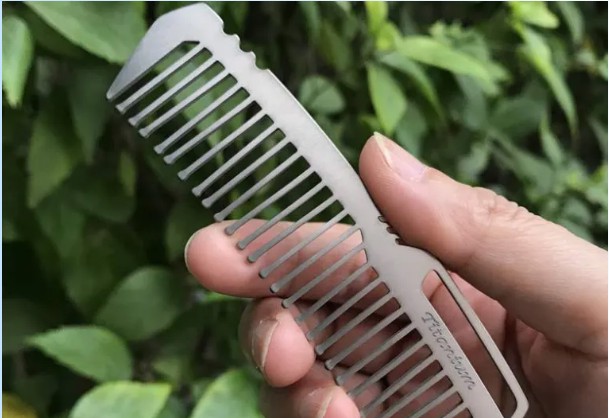
 A New Chapter in Titanium Alloy Applications: Titanium Combs from Aerospace to Hair Care13/04/2026

Send Us A Message